

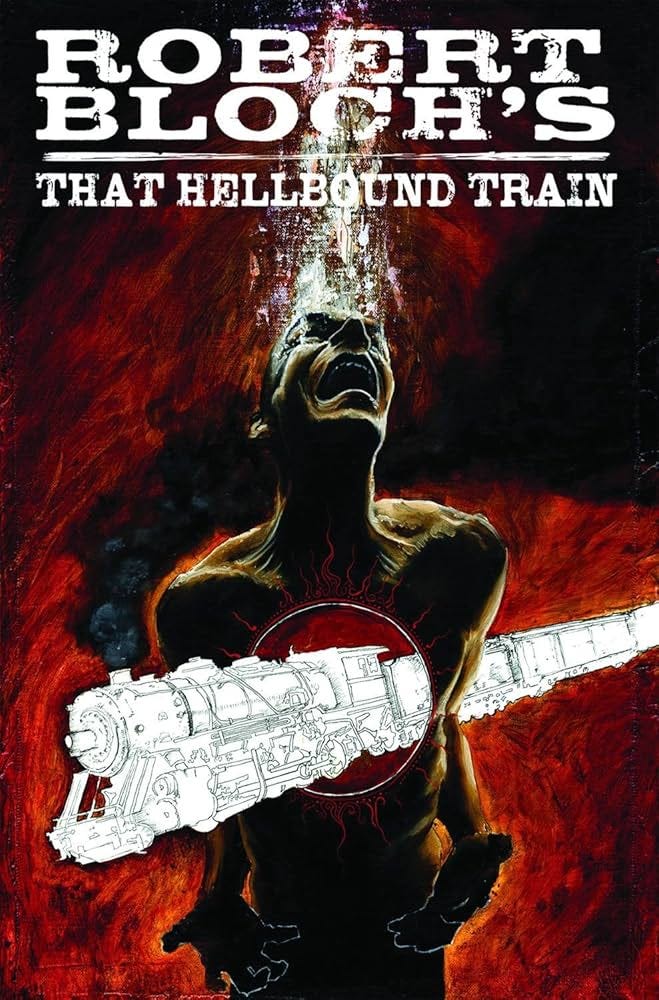
Literal deals with the Devil are an absolutely classic trope in literature. I don’t know why I enjoy them so much, but maybe it’s because they have two possible endings, and both can be immensely satisfying. Either the mortal protagonist is put in his place, in which case often some sort of a lesson is taught, or he gets one over on the literal personification of evil.
In “That Hell-Bound Train”, the deal Martin makes with the Devil is a simple one. In exchange for his soul, he gets exactly one usage of a magical stopwatch, one which will stop time forever, allowing him to live forever in an eternal moment, dodging the need to eventually board the titular Hell-Bound Train to its final destination.
At first, Martin is tempted to use the watch in any random hedonistic moment. But instead, he ends up using it as motivation to become more successful in life, to find an even better and better moment to live eternally in. He chases perfection for his entire life, and misses out on his chance to live eternally in the best time he can. Or does he?
“That Hell-Bound Train” is formulaic and trope-y, but in a satisfying, enjoyable way. It’s not a mind-blowing story, but I have absolutely nothing to complain about; it’s a good time.
The Verdict: Good Stuff

Tomorrow: “Flowers for Algernon” by Daniel Keyes