
Conference Realignment, Algorithmically: 2025 Edition
Using an algorithm to create the "perfect" 32 college basketball conferences: again, but this time with pictures!

It’s July 1st, which means 2025-26 conference realignment is now officially in place. And as with every year, my thought is: is this how we should be going about this? UMass in the MAC? Really? Is this what football has done to us?
In March 2023, I wrote a post describing a dream I had. It was the midst of the turmoil of the latest round of power conference realignment, and I dreamed of a world where D1 athletic conferences were determined, not by money or by football or by TV contracts, but purely selfishly by the only sport I personally care about: men’s college basketball.
So, in a fury of midnight inspiration, I turned that dream into a (virtual) reality. I wrote some truly terrible Python code, spent an hour or two copy-pasting arena GPS coordinates and program ratings into a CSV file, had my laptop spit out some fake conferences, gave them some very dumb names, wrote some not-very-witty one-liners, and published a post to share with a few friends.
And now I’m back to do basically the same thing again, but just a little bit better. Conference realignment never ends, as schools and leagues further chase the almighty dollar. But with the dust seemingly mostly settled for now on the new power conference struggle, and most new movement being in the new Pac-12 and lower mid-major leagues, now seemed like a good time to revisit the idea, and put a bit more effort into the presentation. We’ve got 3 more years of data and 7 new d1 teams, but more importantly, I made maps this time! Thanks to my friend Claire for her .kmz file of all D1 arenas/logos; if it wasn’t for that, this post would likely be mapless once again.
The Method, In Brief
The algorithm here used is fairly simple. We care about two factors: geographic location and program strength. The former is just pairs of GPS coordinates, the latter we use Kenpom’s program ratings for. I apply some adjustments, plot those three coordinates in 3D space, then use a modified version of k-means clustering to group clusters of nearby teams into conferences. More technical details can be found at the end of this post.
I’d like to address something here that I didn’t acknowledge in my previous post. Kenpom’s program ratings are meant as a general measure of the desirability/prestige/success of a program for, for example, evaluating the prestige of coaching jobs, independent of any single season performance. This is more or less what I’m wanting to rank, and is certainly better than any custom rating system I could possibly come up with. But there is a caveat for this project: the program ratings include a factor of conference strength, which somewhat bakes in some of the real-world factors we’re trying to avoid. I don’t have a great solution for this, unfortunately; I don’t know of any alternative metrics that do as good a job at measuring what I’m looking for in terms of program strength. But it’s a small enough factor that I’m okay with it being in there; perhaps it captures some amount of abstract program desirability that other data doesn’t (or maybe that’s just cope).
As a final note, I’m still using 32 conferences despite the current temporary non-existence of the Pac-12 (and potential future non-existence of the WAC) because in my mind that’s just the right number of conferences to have.
Anyway, that’s enough yapping for now; let’s look at the conferences, in order of strength.
Tier 0: The Super League
1. The Super League (7 teams) [average strength = 24.2]
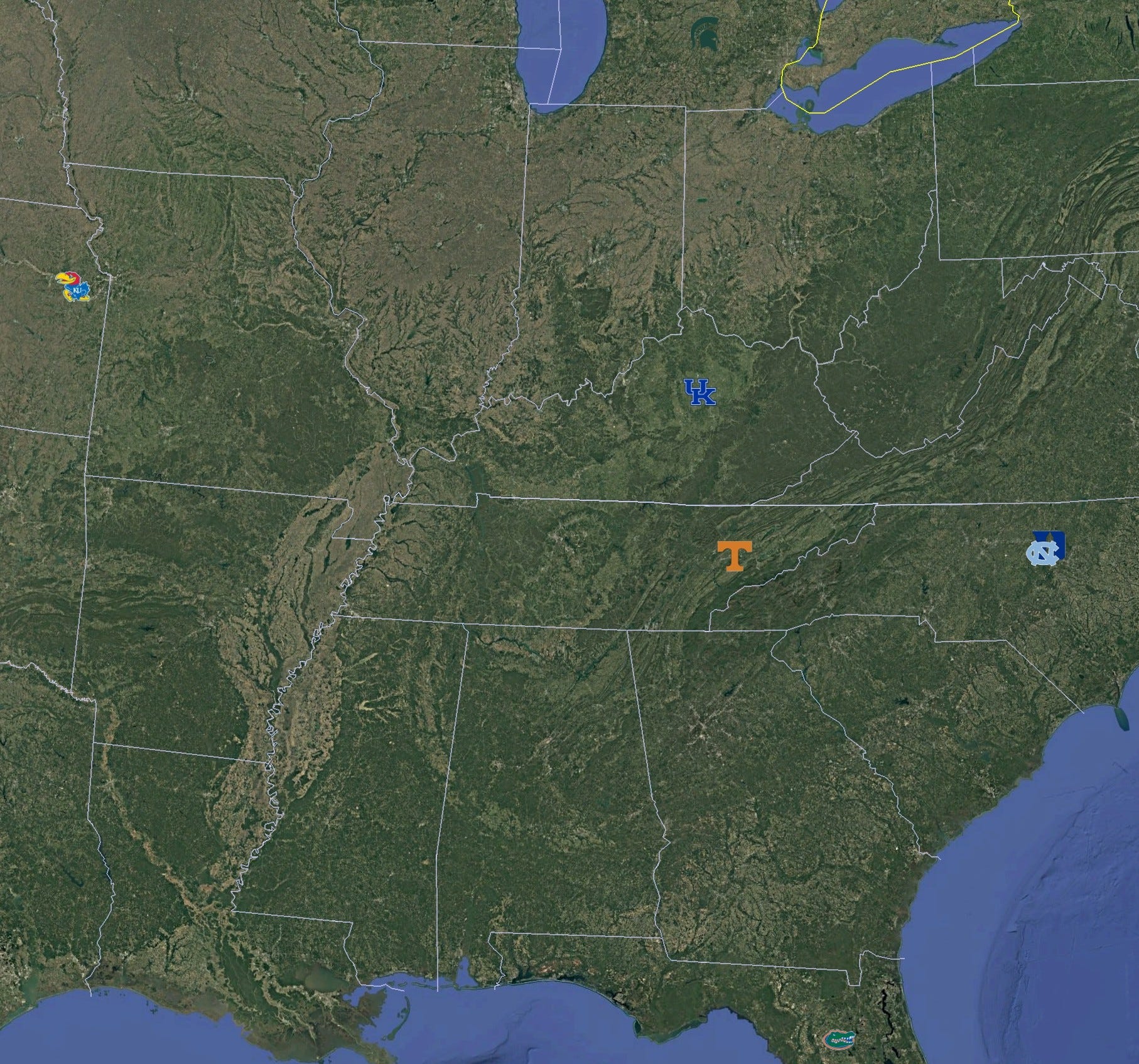
Duke, Florida, Kansas, Kentucky, Michigan State, North Carolina, Tennessee
The way the program rankings work with my algorithm, the top few teams are far enough above the rest that they sort of inevitably get separated into their own league, mostly regardless of geography. This league contains 6 of the top 7 programs—Arizona gets left out for geographic reasons while Tennessee at #13 gets pulled in by being a very strong program basically right at the center of the league’s territory.
Tier 1: The New Power Five
Tier 1 is clearly the best five leagues below the Super League. Due to being smaller than their real-life counterparts, they tend to be a bit stronger.
2. The Pac-8 (8 teams) [16.1]
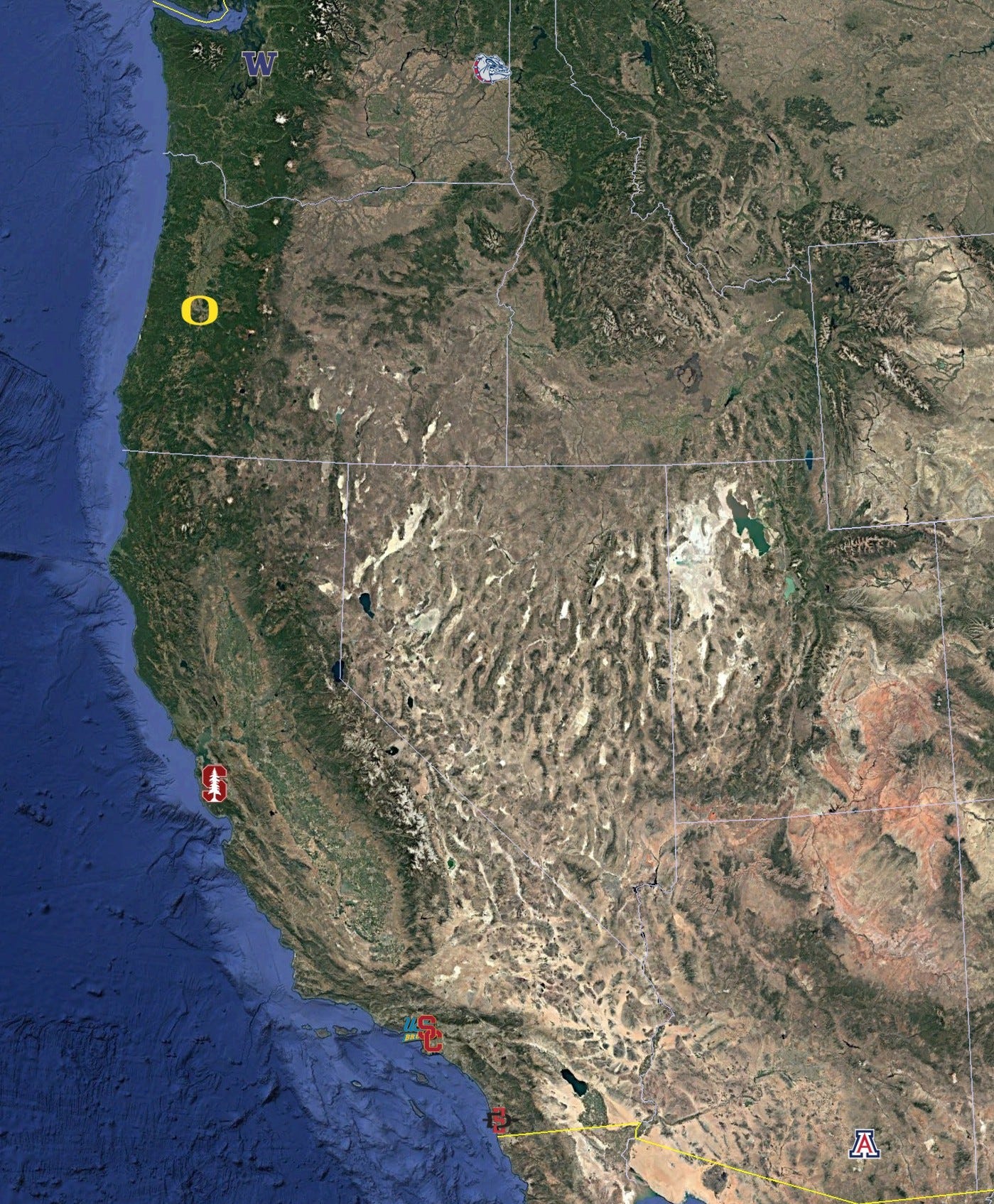
Arizona, Gonzaga, Oregon, San Diego State, Stanford, UCLA, USC, Washington
In general, despite them not being explicitly considered, my algorithm didn’t split up too many major rivalries (which makes sense—rival schools are typically located near each other and have somewhat similar strength, historically). The west coast is the exception. Arizona, Oregon, and Washington all leave behind their corresponding State partners, Gonzaga gets split from Saint Mary’s, and Stanford goes on without Cal. Then again, real life has done 4/5 of those too (and moved the fifth to a nonsensical conference), so we’re not really getting much worse with this. This league would have some fun basketball, but it doesn’t exactly get back the Pac-12 charm.
3. The Big Ten Plus Two (12 teams) [15.2]
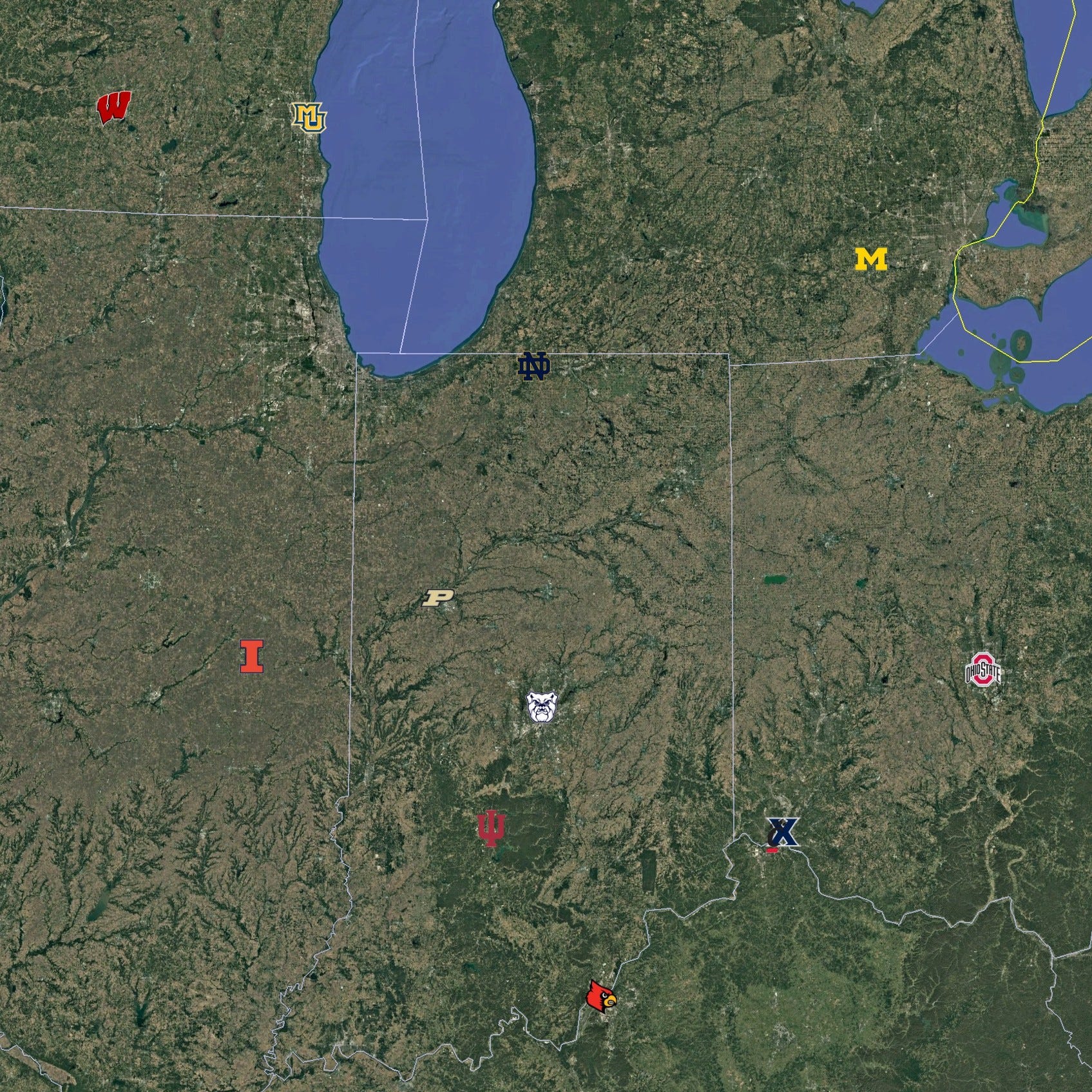
Butler, Cincinnati, Illinois, Indiana, Louisville, Marquette, Michigan, Notre Dame, Ohio State, Purdue, Wisconsin, Xavier
The last edition of this project had a very similar league in this region, and I said I would watch the hell out of it. This rendition might be even better, swapping out Iowa for Ohio State and Louisville. It’s most of the best of midwest basketball—what’s not to love?
4. The New Big East (11 teams) [14.9]
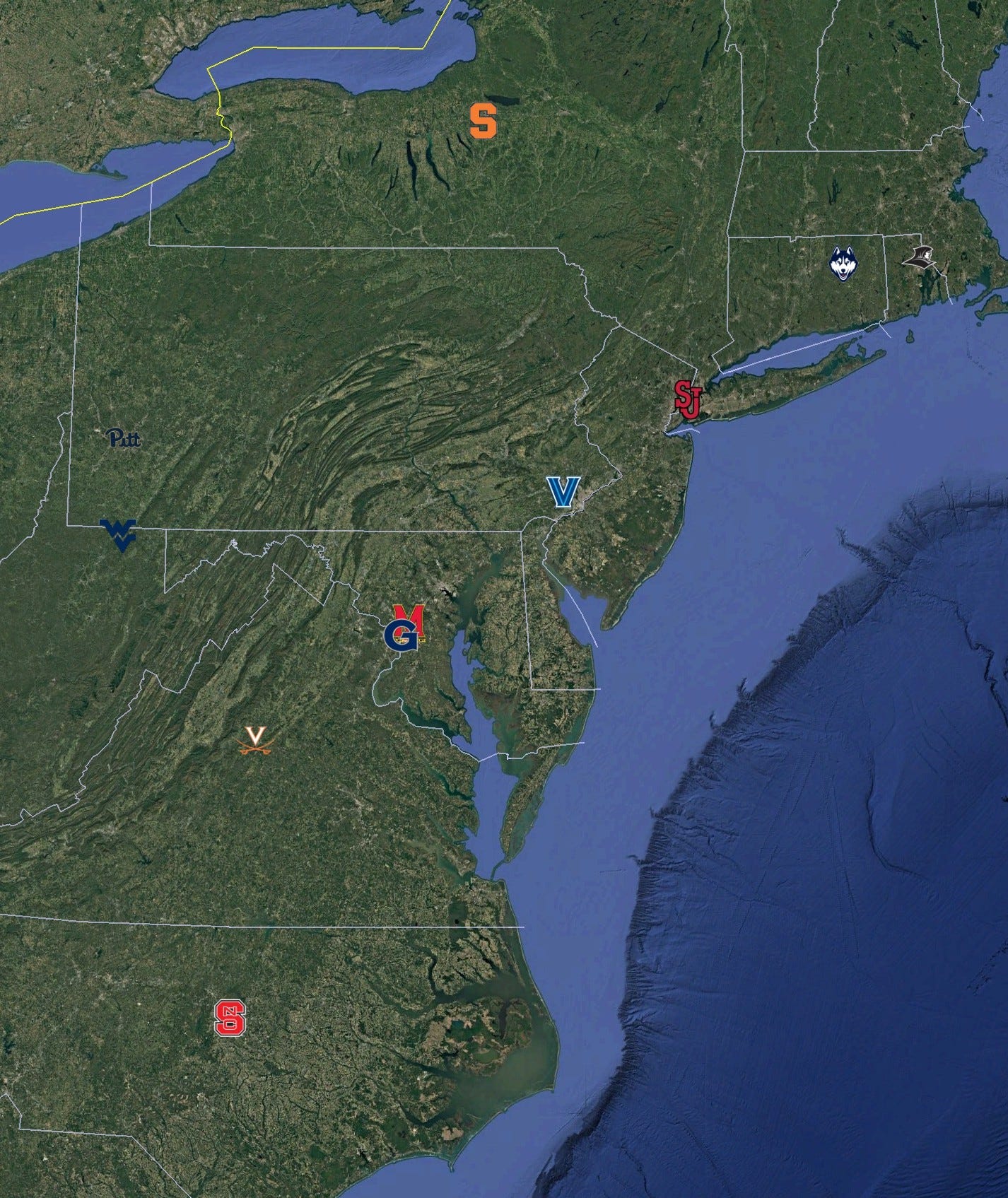
UConn, Georgetown, Maryland, NC State, Pittsburgh, Providence, St John’s, Syracuse, Villanova, Virginia, West Virginia
An 11-team league composed of eight teams from the pre-2013 Big East, with a couple new additions from other conferences? Now where does this sound familiar? Yeah, the exact composition may be different, but this league certainly feels big and east.
5. The Big 9 (9 teams) [14.8]
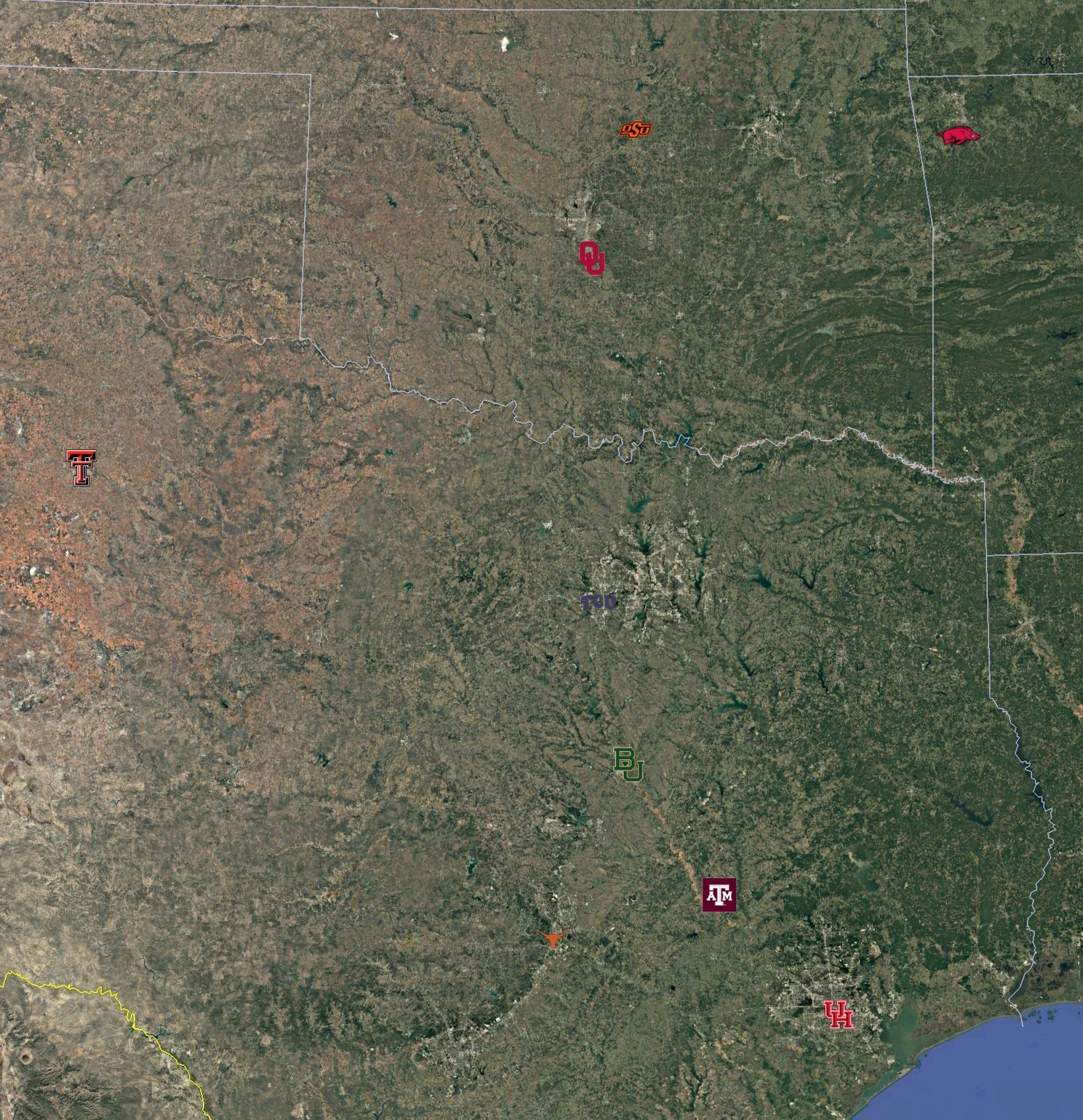
Arkansas, Baylor, Houston, Oklahoma, Oklahoma State, TCU, Texas, Texas A&M, Texas Tech
A pretty distilled core of Big 12 country, mostly consisting of current and former teams. And also Arkansas, because why not.
6. The Mini-SEC (9 teams) [13.4]
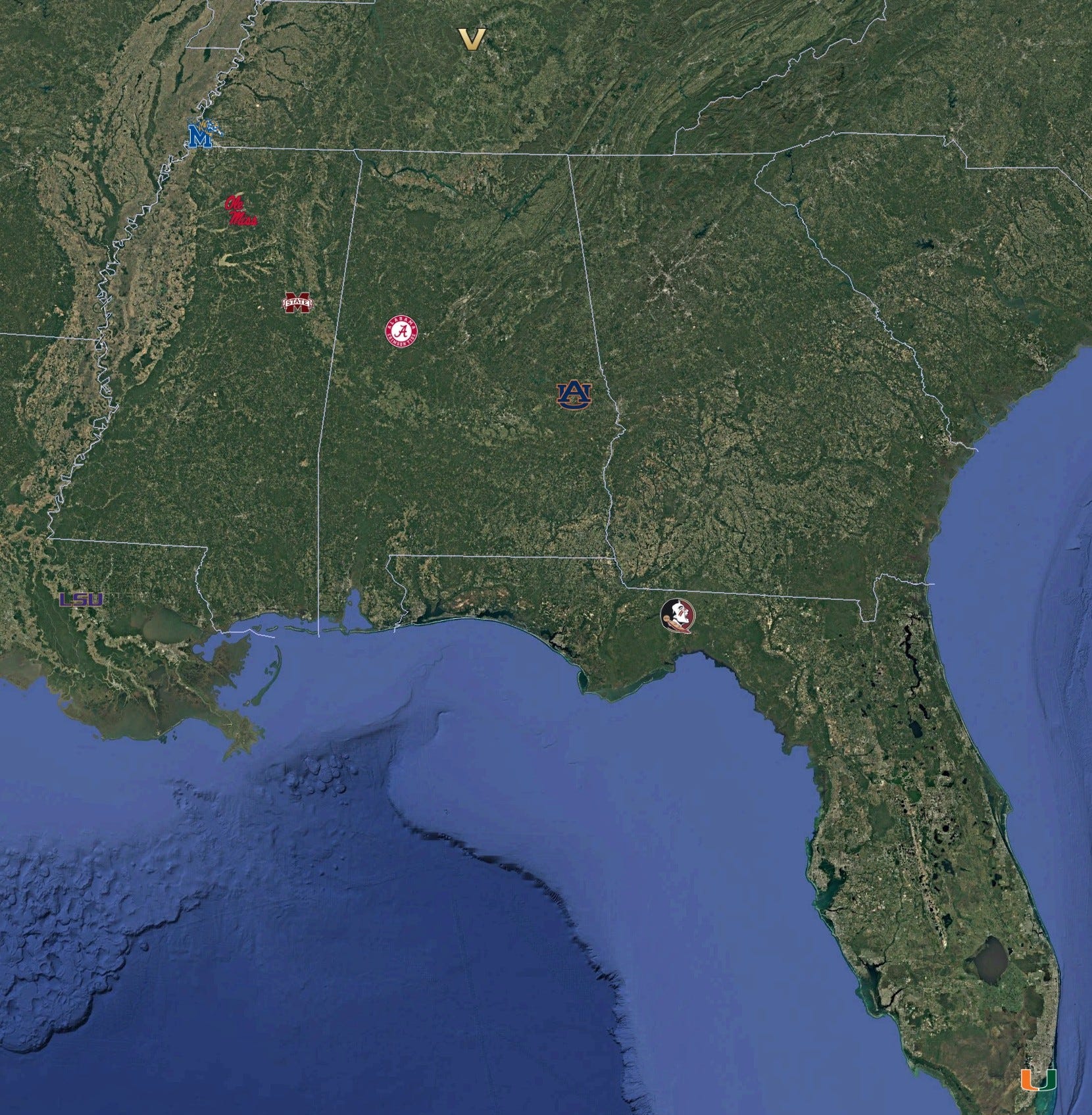
Alabama, Auburn, Florida State, LSU, Memphis, Miami (FL), Ole Miss, Mississippi State, Vanderbilt
It’s certainly interesting after last season to have the mostly-SEC league be the weakest of the power conferences created by the algorithm. If the SEC continues its dominance for a few more seasons, I’d expect that to change, but for now most of these schools don’t have a ton of basketball history. Still, it’s an interesting little slice of the SEC, and would be a very compact regional league if not for Miami sneaking its way in.
Tier 1.5
7. The Corn League (9 teams) [11.1]
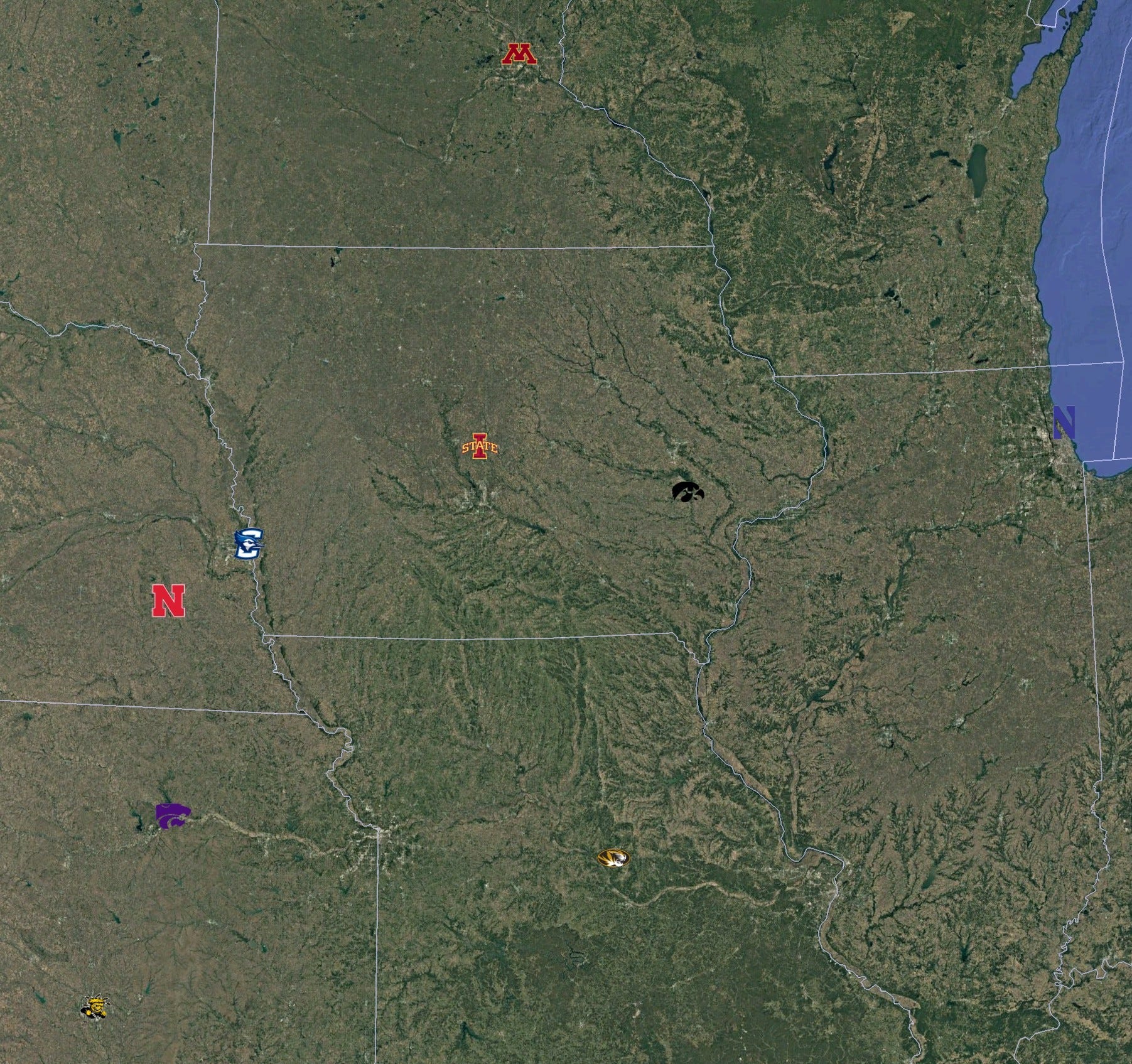
Creighton, Iowa, Iowa State, Kansas State, Minnesota, Missouri, Nebraska, Northwestern, Wichita State
This league sits exactly between the power leagues and the next tier in terms of strength, so I’ve decided to be a coward and fence-sit on its classification. The Corn League sits at the boundaries of a few existing leagues, and most of these teams have had a few very strong years but don’t typically sit in the upper echelons of their current conferences.
Tier 2: The Borderline Powers
This tier fills a space that doesn’t really exist in the current conference alignment. Both these leagues are a clear step below the power leagues, but don’t have the dregs that the real conferences in that position (A10, MWC, AAC, etc) have dragging them down, leaving them somewhat comparable to lower-end power conferences.
8. The Mountain Tops (8 teams) [8.7]

Arizona State, BYU, Colorado, Colorado State, New Mexico, UNLV, Utah, Utah State
If the current Mountain West has too many non-mountainous schools for you, this league is the solution. No coastal California to be found here.
9. The Piedmont League (10 teams) [8.1]
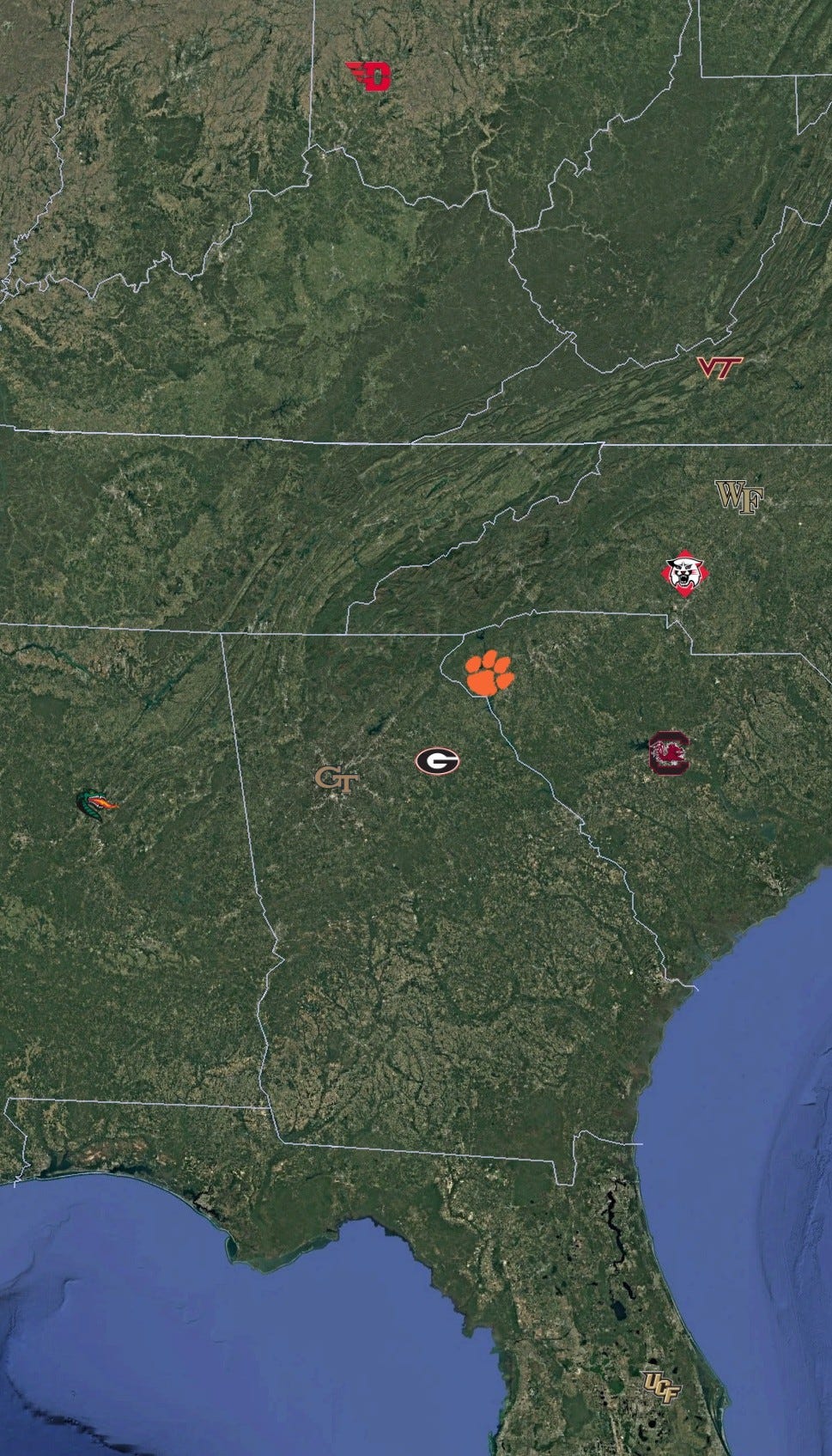
Clemson, Davidson, Dayton, Georgia, Georgia Tech, South Carolina, UAB, UCF, Virginia Tech, Wake Forest
I’ll admit I don’t really know what the word Piedmont means, so I hope I’m using it correctly here. I also don’t really know how Dayton ends up in this league of all places; overall this is a strange combination of teams in general.
Tier 3: The Top Mid-Majors
This tier consists of two leagues that, despite being essentially remixes of the Mountain West, WCC, and A-10, the current 6th-8th strongest conferences, are ranked 10th and 11th in this fantasy conference realignment. Funny what not having 18-team superconferences will do to your distribution of conference strength. These leagues would likely get 2-4 bids most years.
10. The Mountain West Coast (9 teams) [5.1]
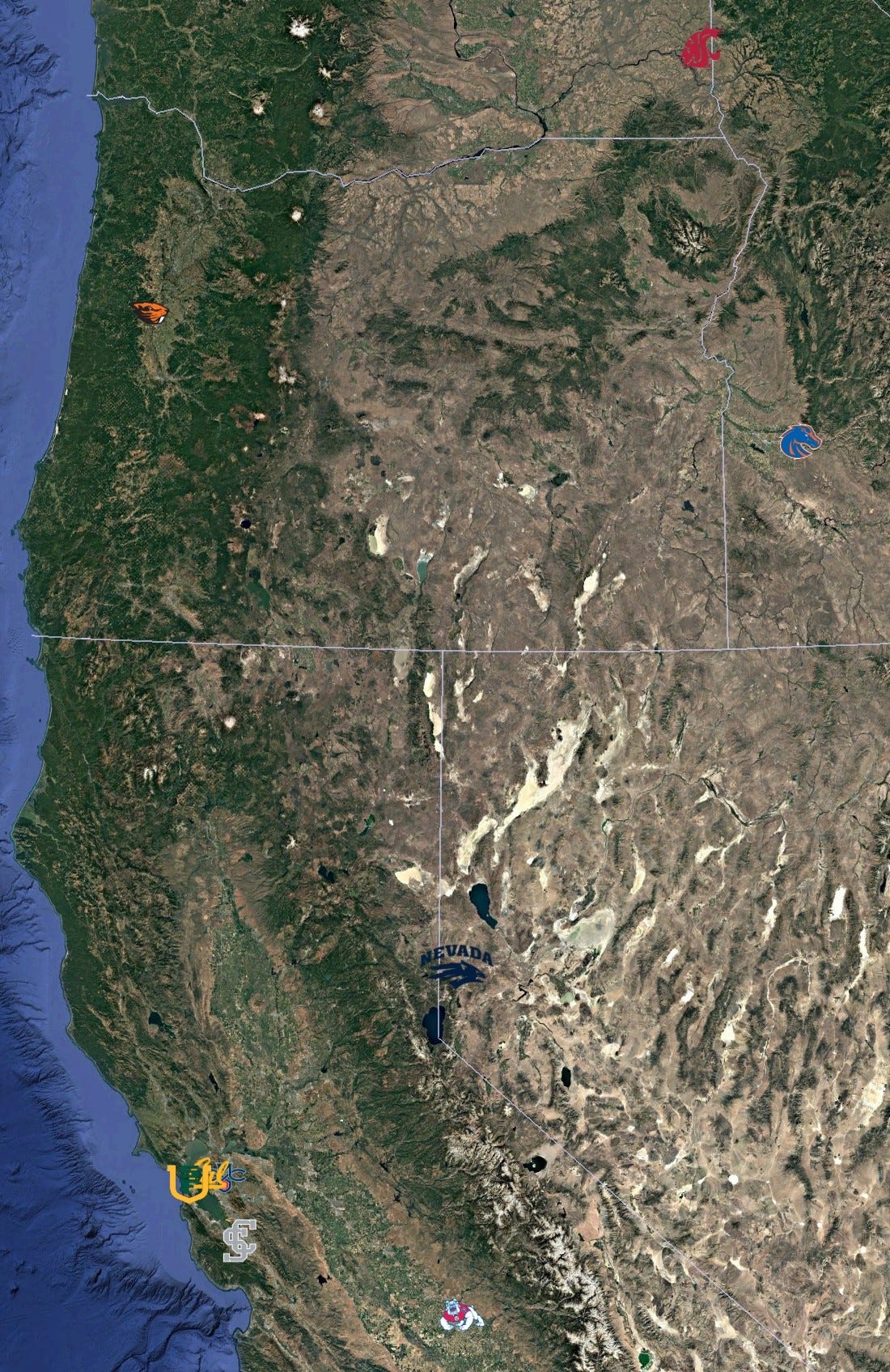
Boise State, California, Fresno State, Nevada, Oregon State, Saint Mary’s, San Francisco, Santa Clara, Washington State
The best of the non-Gonzaga WCC with a healthy serving of solid Mountain West teams mixed in. Also, Cal is here; their admin would HATE this.
11. The Atlantic 12 (12 teams) [5.0]
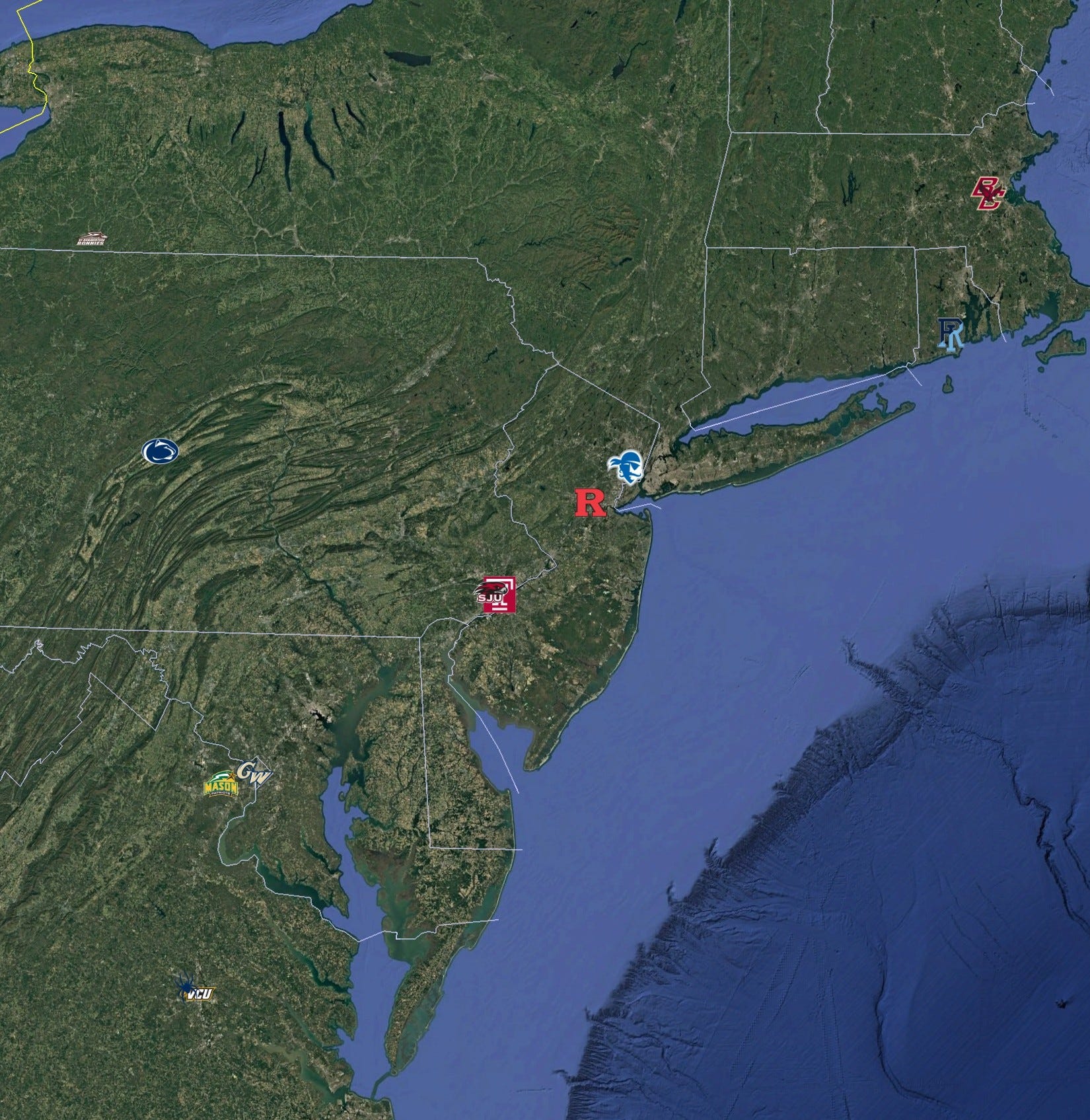
Boston College, George Mason, George Washington, Penn State, Rhode Island, Richmond, Rutgers, Saint Joseph’s, Seton Hall, St Bonaventure, Temple, VCU
Eight of the stronger A-10 teams (Temple is an A-10 school in my mind) alongside four teams that, let’s be honest, are struggling in their current power conference positions. There’s some solid mid-major ball to be found here.
Tier 4: Solid Mid-Majors
These next two leagues are a clear step down from the previous two, but still stand out from the mid-major crowd. These are the leagues where the second-place team gets snubbed on a tourney bid and goes to the NIT finals every year.
12. The Greater Missouri Valley (14 teams) [1.6]
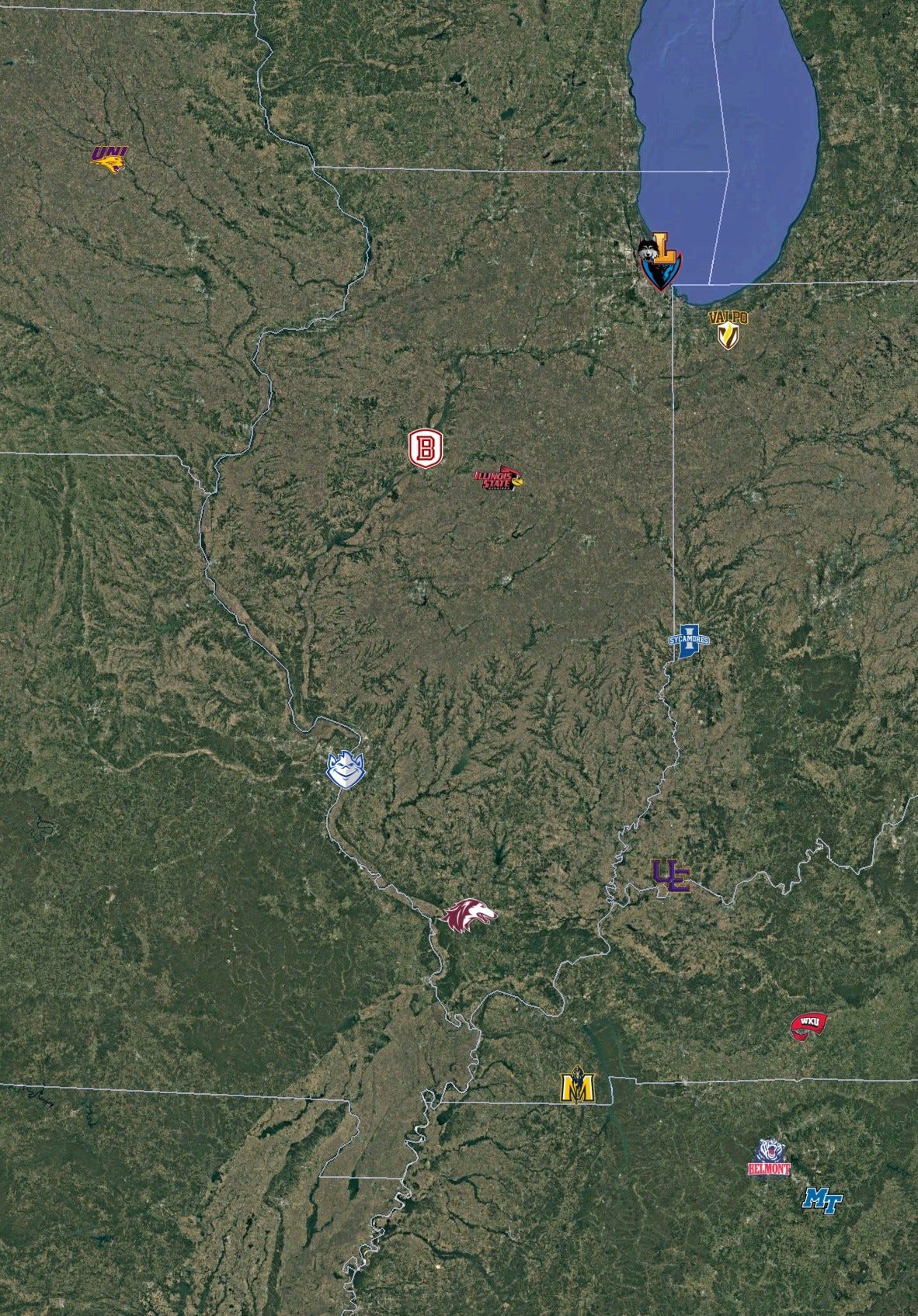
Belmont, Bradley, DePaul, Evansville, Illinois State, Indiana State, Loyola Chicago, Middle Tennessee, Murray State, Northern Iowa, Saint Louis, Southern Illinois, Valparaiso, Western Kentucky
Now this is a basketball conference. And that basketball conference is basically the MVC, with a few additional neighbors. Notice that Drake just barely misses out on being in this league. This information will be important later. Also, obligatory lol DePaul.
13. The South Central Conference (8 teams) [1.3]
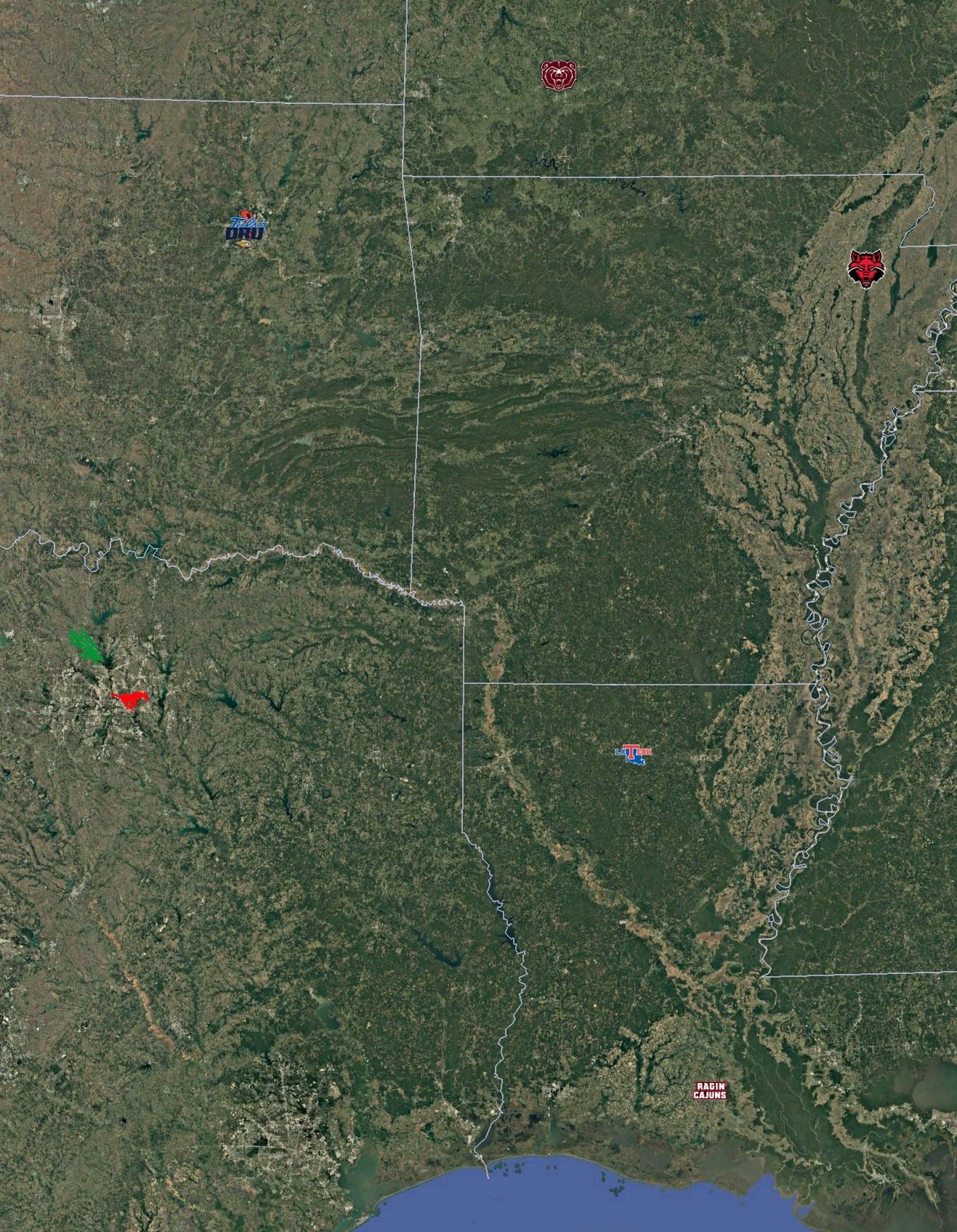
Arkansas State, Louisiana, Louisiana Tech, Missouri State, North Texas, Oral Roberts, SMU, Tulsa
I was going to make a comment about DePaul being the current power conference team who falls to the worst conference, until I remembered that SMU is a power conference team now. I don’t think this league is nearly as exciting as the GMVC, but it consists largely of quietly solid ball clubs.
Tier 5: Mid-Major Bonanza
Now we get into the meat of D1. These 11 conferences are a mix of being nearly identical to existing leagues, and wild combinations of teams from across various leagues. On the whole, they tend to be very geographically compact, as there are a lot of teams in the middling team rating range.
14. The Mountain Less (8 teams) [-1.2]
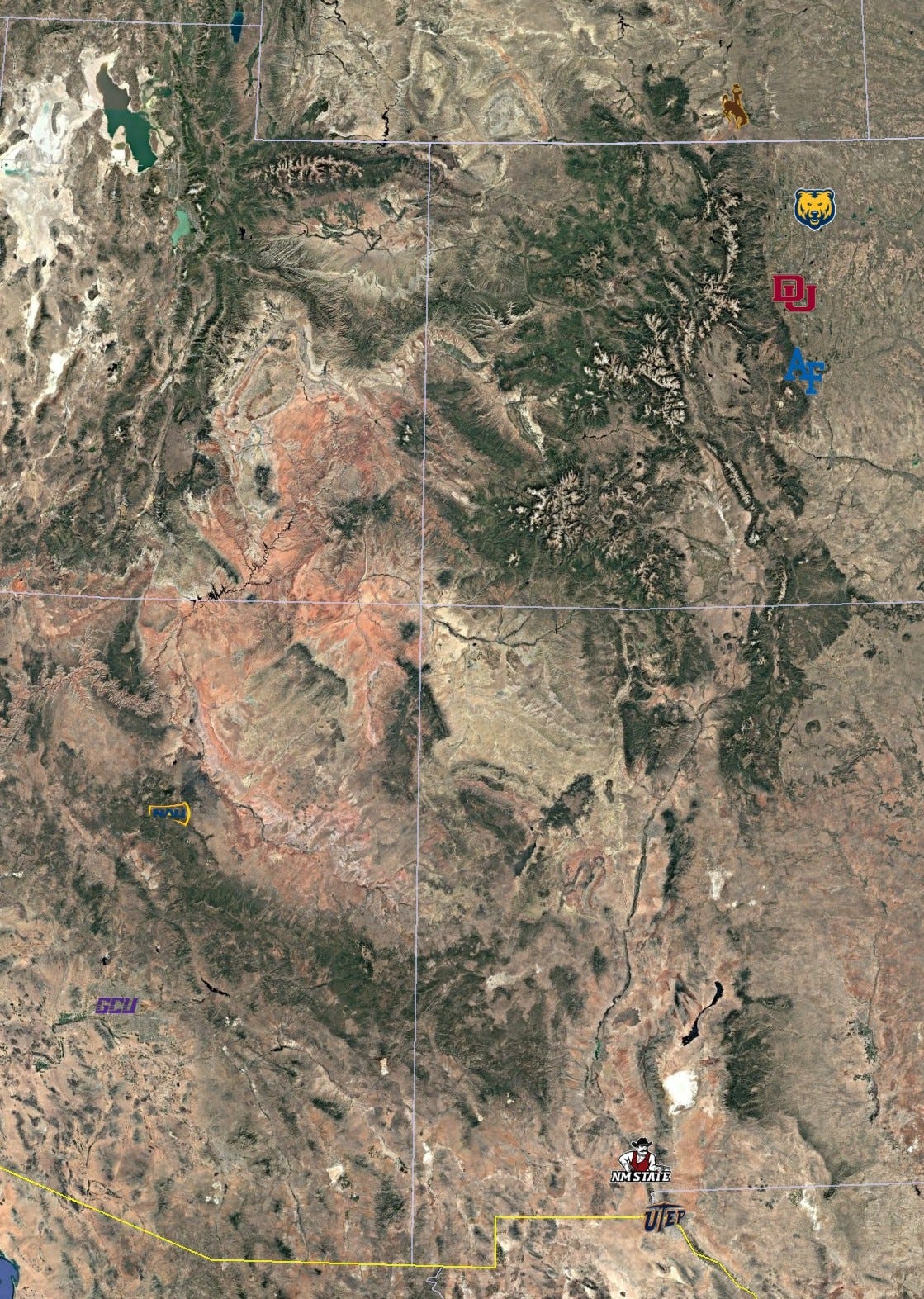
Air Force, Denver, Grand Canyon, New Mexico State, Northern Arizona, Northern Colorado, UTEP, Wyoming
Yes, this is my third conference name that’s a play on “Mountain West”—I’d like to see you come up with 32 reasonable/funny conference names. This league’s footprint is extremely similar to the Mountain Tops’, making it almost feel like a lower division of that league. Given the recent trajectories of the teams here, GCU probably dominates this conference.
15. The Carolina Conference (13 teams) [-1.7]
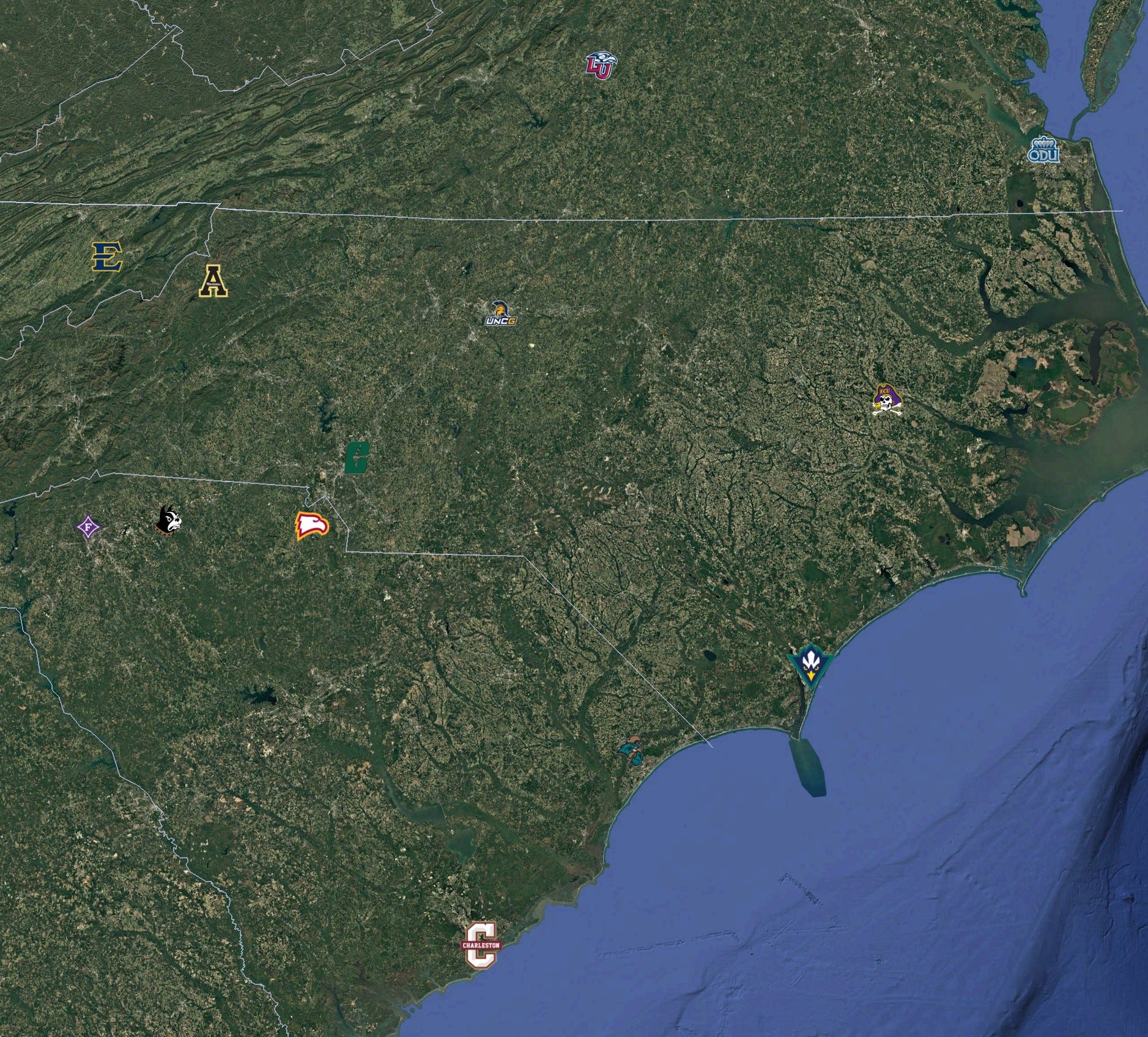
Appalachian State, Charleston, Charlotte, Coastal Carolina, East Carolina, East Tennessee State, Furman, Liberty, Old Dominion, UNC Greensboro, UNC Wilmington, Winthrop, Wofford
Obligatory Fuck Liberty. Otherwise, this is a pretty fun league.
16. The Moss League (15 teams) [-1.9]
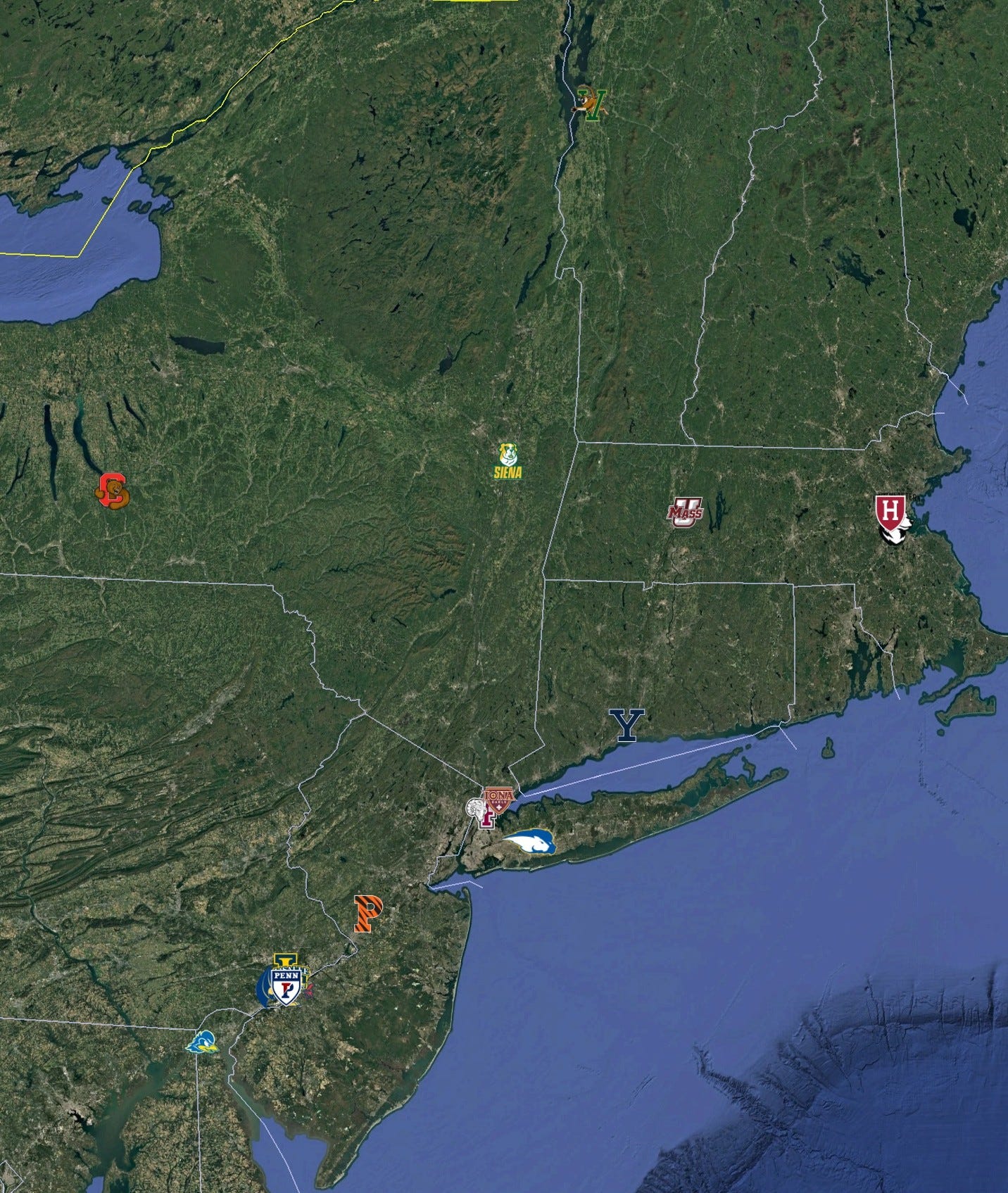
Cornell, Delaware, Drexel, Fordham, Harvard, Hofstra, Iona, LA Salle, UMass, Northeastern, Penn, Princeton, Siena, Vermont, Yale
While I was deciding on a good pun on the Ivy League, I had an epiphany—is this where the term bush league comes from? As it turns out, the answer is absolutely not. But imagine. Anyway, we need the formation of this league purely to get Vermont out of the America East. John Becker’s teams deserve better.
17. It’s Just The Big West (14 teams) [-2.3]
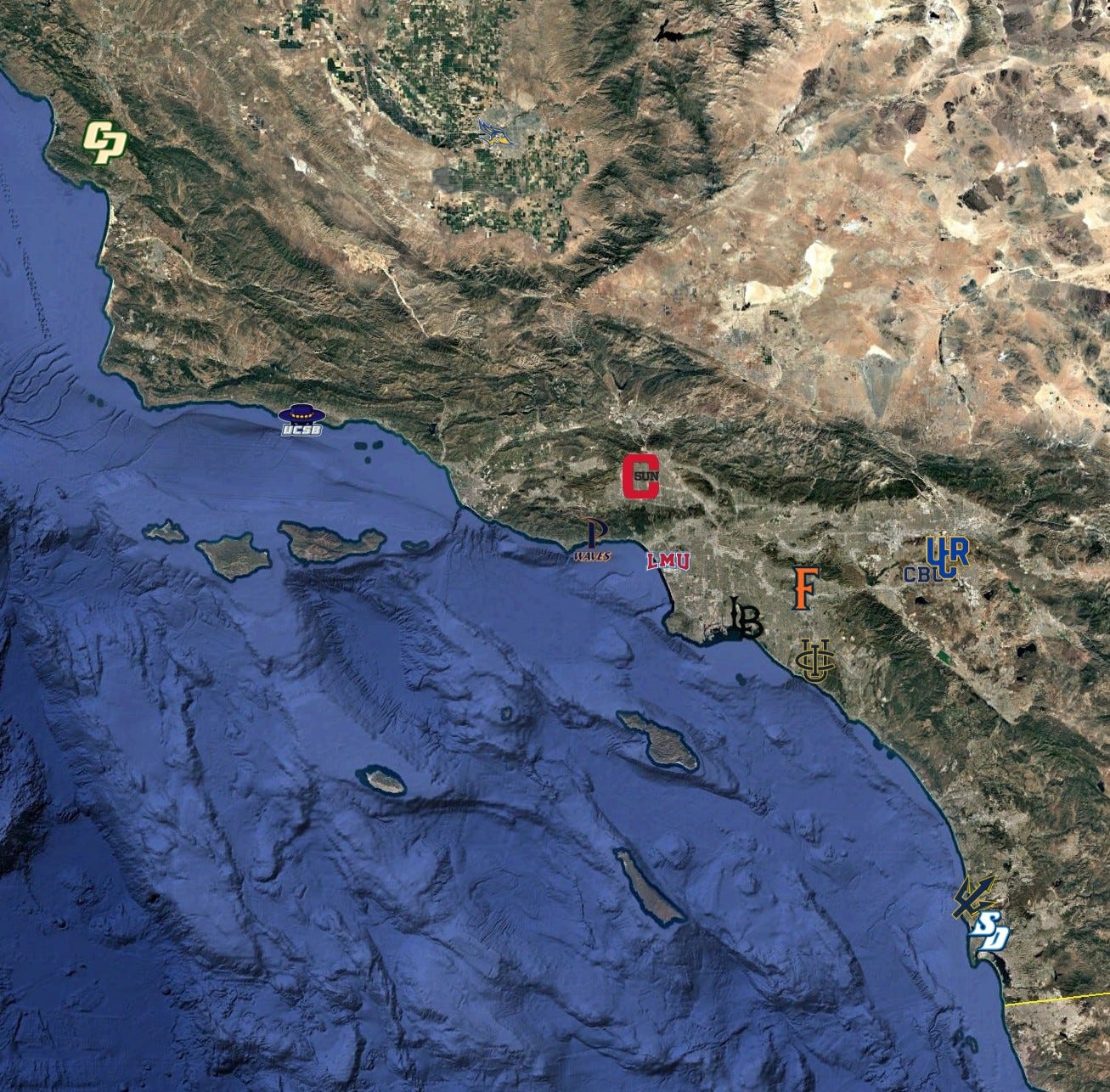
Cal Baptist, Cal Poly, Cal State Bakersfield, Cal State Fullerton, CSUN, Hawaii, Long Beach State, Loyola Marymount, Pepperdine, San Diego, UC Irvine, UC Riverside, UC San Diego, UC Santa Barbara
This would be by far the most geographically compact league in the country… until you add in Hawaii, at which point it automatically becomes the least geographically compact league in the country. And I use the words “add in” literally here; I excluded Hawaii from my code because it’s simply too big of an outlier and breaks everything. This is unambiguously the league it best fits into, though. Other schools in this league include every current Big West team except Davis, a future Big West school in Cal Baptist, and a couple WCC additions. Big West, you’re doing a good job.
18. The Sunnier Belt (12 teams) [-2.5]
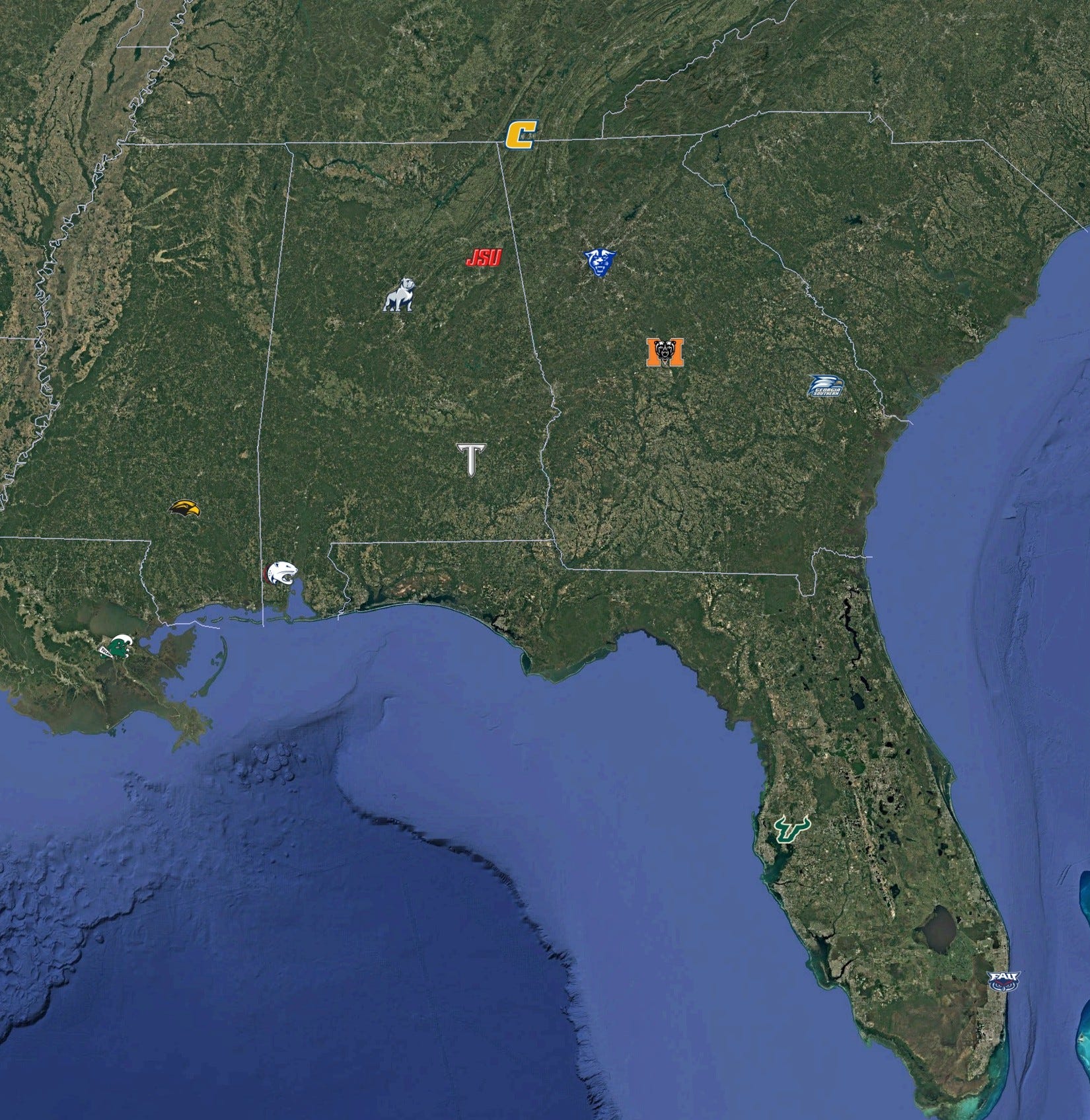
Chattanooga, Florida Atlantic, Georgia Southern, Georgia State, Jacksonville State, Mercer, Samford, South Alabama, South Florida, Southern Miss, Troy, Tulane
Pretty fun league: some of the best Sun Belt teams, some solid SoCon teams, and a few bonus extras. For those keeping track at home, this is the third conference we’ve seen whose geographical compactness is ruined by the state of Florida.
19. The Erie-Appalachian League (13 teams) [-2.7]
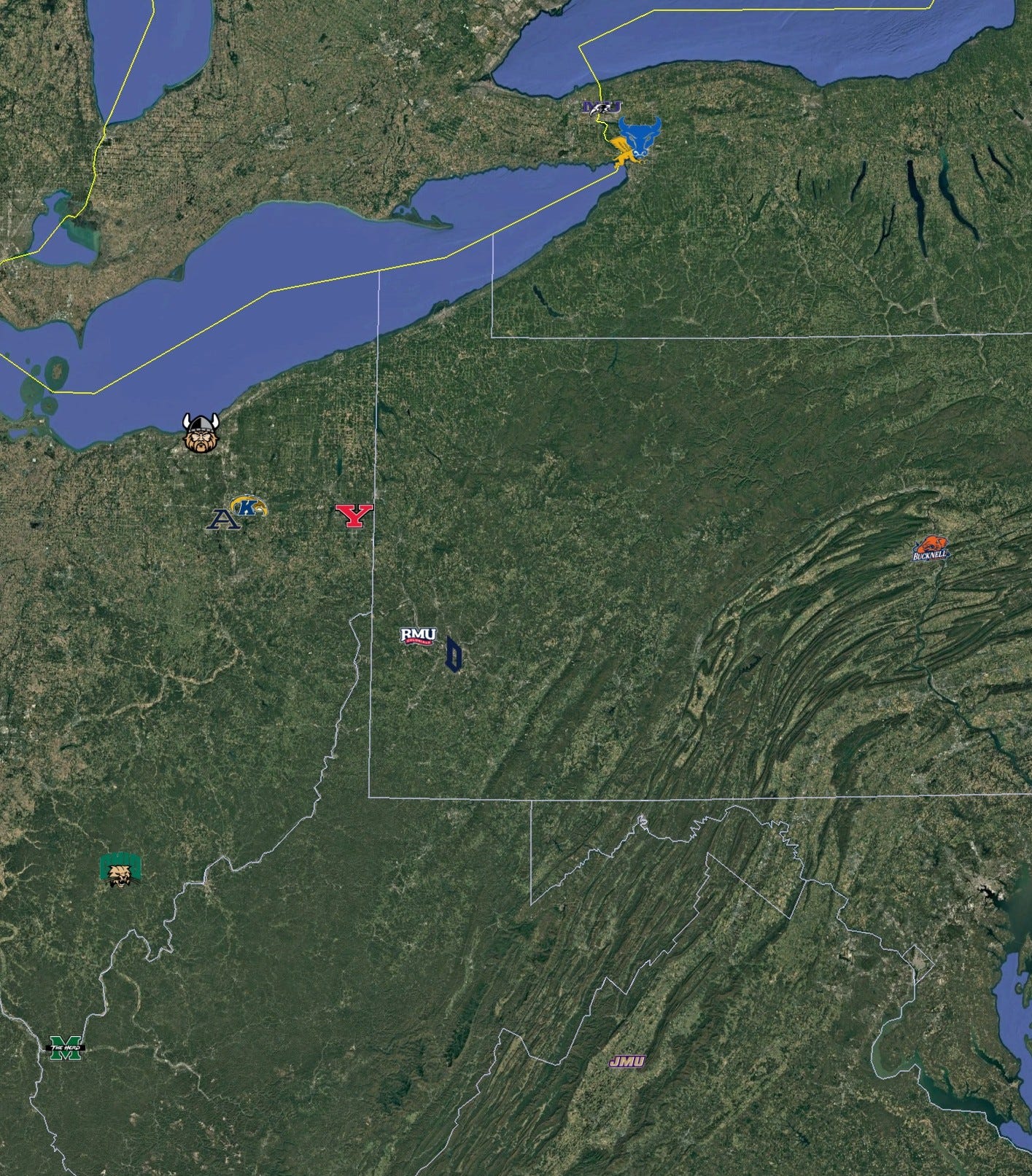
Akron, Bucknell, Buffalo, Canisius, Cleveland State, Duquesne, James Madison, Kent State, Marshall, Niagara, Ohio, Robert Morris, Youngstown State
This one is a weird one, combining the eastern parts of the MAC with various other teams to form a strange agglomeration centered around Pittsburgh. After the insanity of the November 2023 matchup, though, I’m not objecting to JMU-Kent State becoming an annual game.
20. Return Of The MAC (16 Teams) [-3.1]
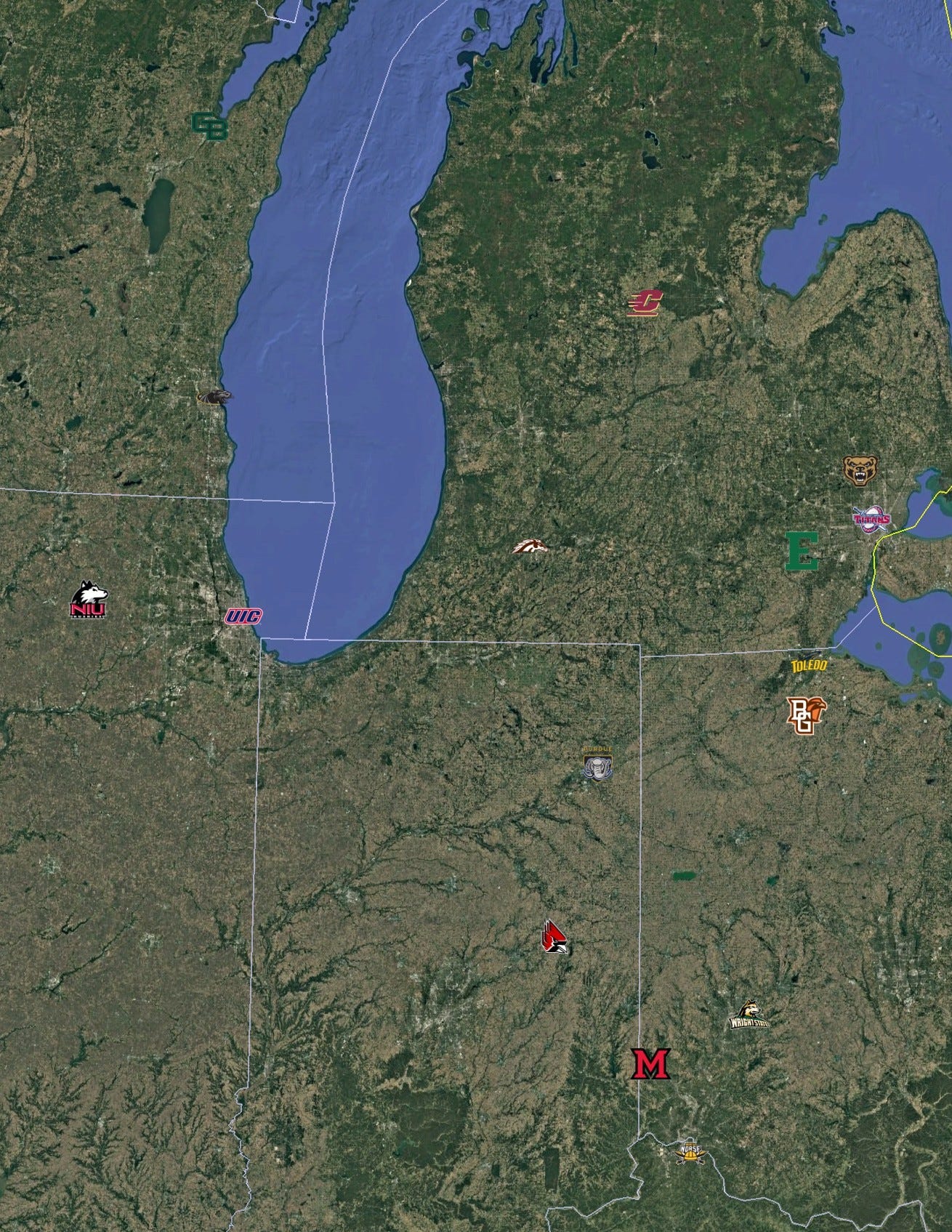
Ball State, Bowling Green, Central Michigan, Detroit Mercy, Eastern Michigan, Green Bay, Illinois Chicago, Miami (OH), Milwaukee, Northern Illinois, Northern Kentucky, Oakland, Purdue Fort Wayne, Toledo, Western Michigan, Wright State
Yeah, I’m reusing this name from last time around. It’s simply too good and I’m not a creative person. The MAC and Horizon combine their forces to form a league somewhere in the middle.
21. The Texas Conference (9 teams) [-3.2]
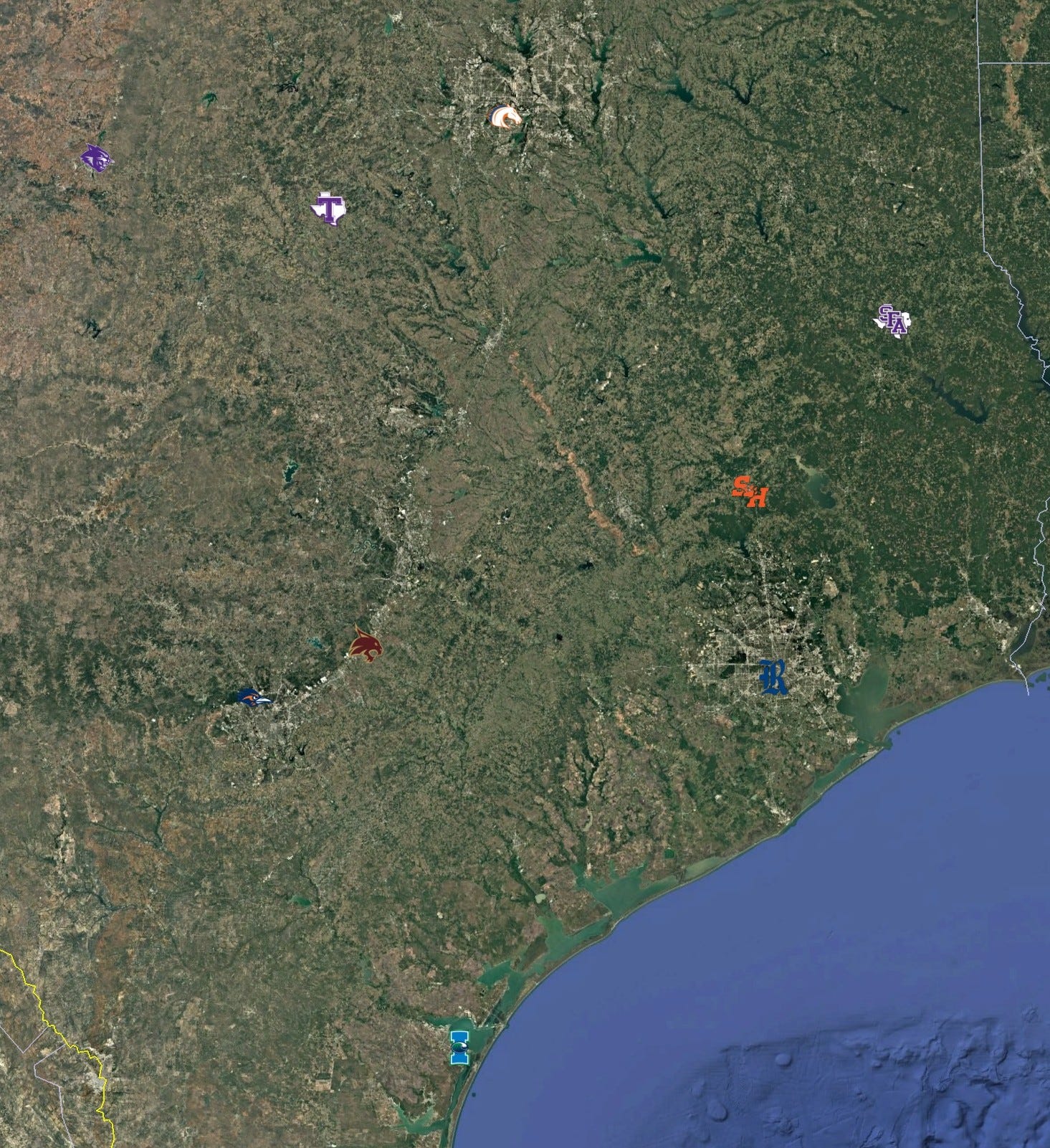
Abilene Christian, Rice, Sam Houston, Stephen F Austin, Tarleton State, Texas A&M Corpus Christi, Texas State, UT Arlington, UTSA
These sure are nine schools located in Texas. They come pretty close to forming a nice triangle shape. I don’t know, man, what am I supposed to say here?
22. The Pacific League (7 teams) [-3.4]
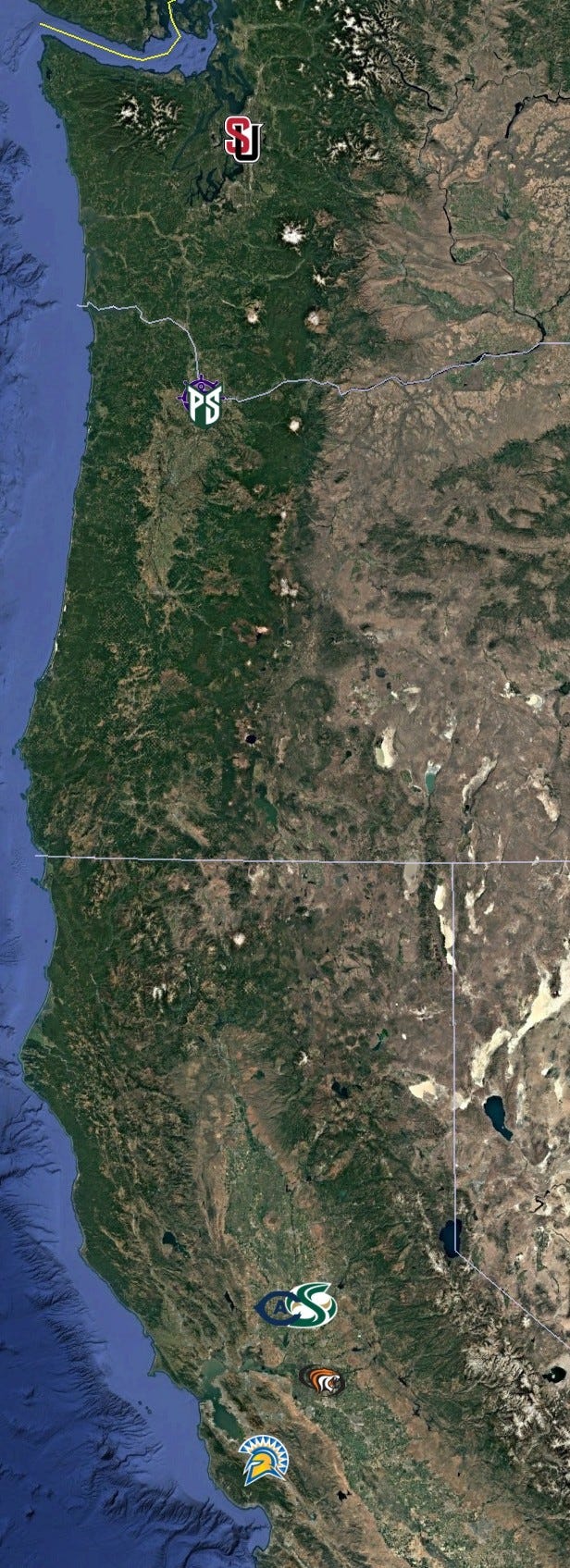
Pacific, Portland, Portland State, Sacramento State, San Jose State, Seattle, UC Davis
The leftovers of the WCC, the westernmost Big Sky teams, plus some random extras. Seeing this list of similarly-regarded west coast teams really puts SJSU basketball into perspective.
23. The Summit League (8 teams) [-3.7]
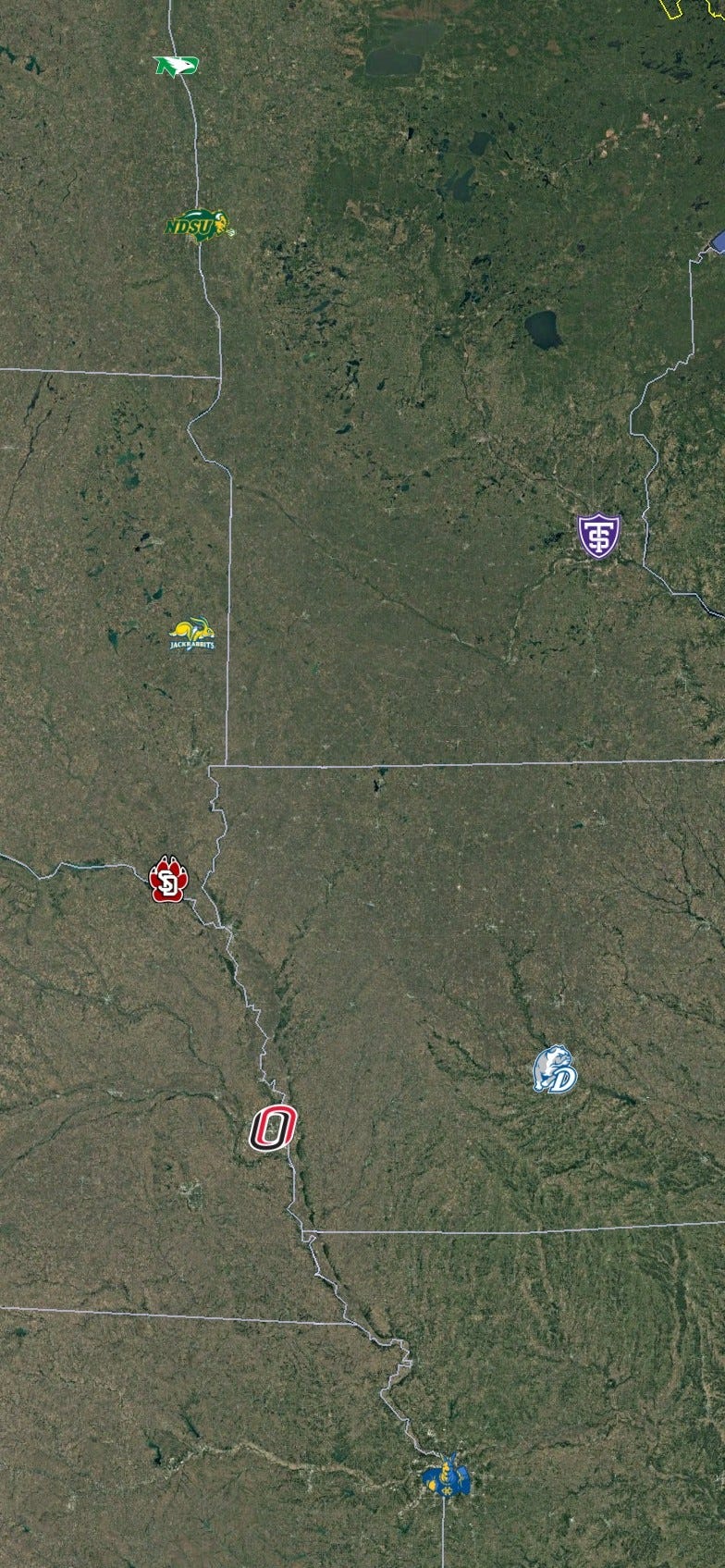
Drake, Kansas City, Omaha, North Dakota, North Dakota State, South Dakota, South Dakota State, St Thomas
Drake is by far the biggest loser of this entire project. From one of the hottest mid-majors for the past several years, to just barely missing out on a couple higher leagues and plummeting down the ranks to what is otherwise a mostly unchanged Summit League. There’s definitely a Kendrick joke to be made here but I’m not nearly clever enough to formulate it.
24. The Big Air (9 teams) [-4.4]

Eastern Washington, Idaho, Idaho State, Montana, Montana State, Southern Utah, Utah Tech, Utah Valley, Weber State
There are a few replacements but this is mostly just the Big Sky. Not a whole lot to say.
Tier 6: The Low Majors
There’s a notable dropoff, albeit not a massive one, between the previous tier and this one. These teams aren’t the absolute worst in the sport, but they’re getting to the point where very few have ever really done much of anything noteworthy.
25. The Atlantic Moon (14 teams) [-6.2]
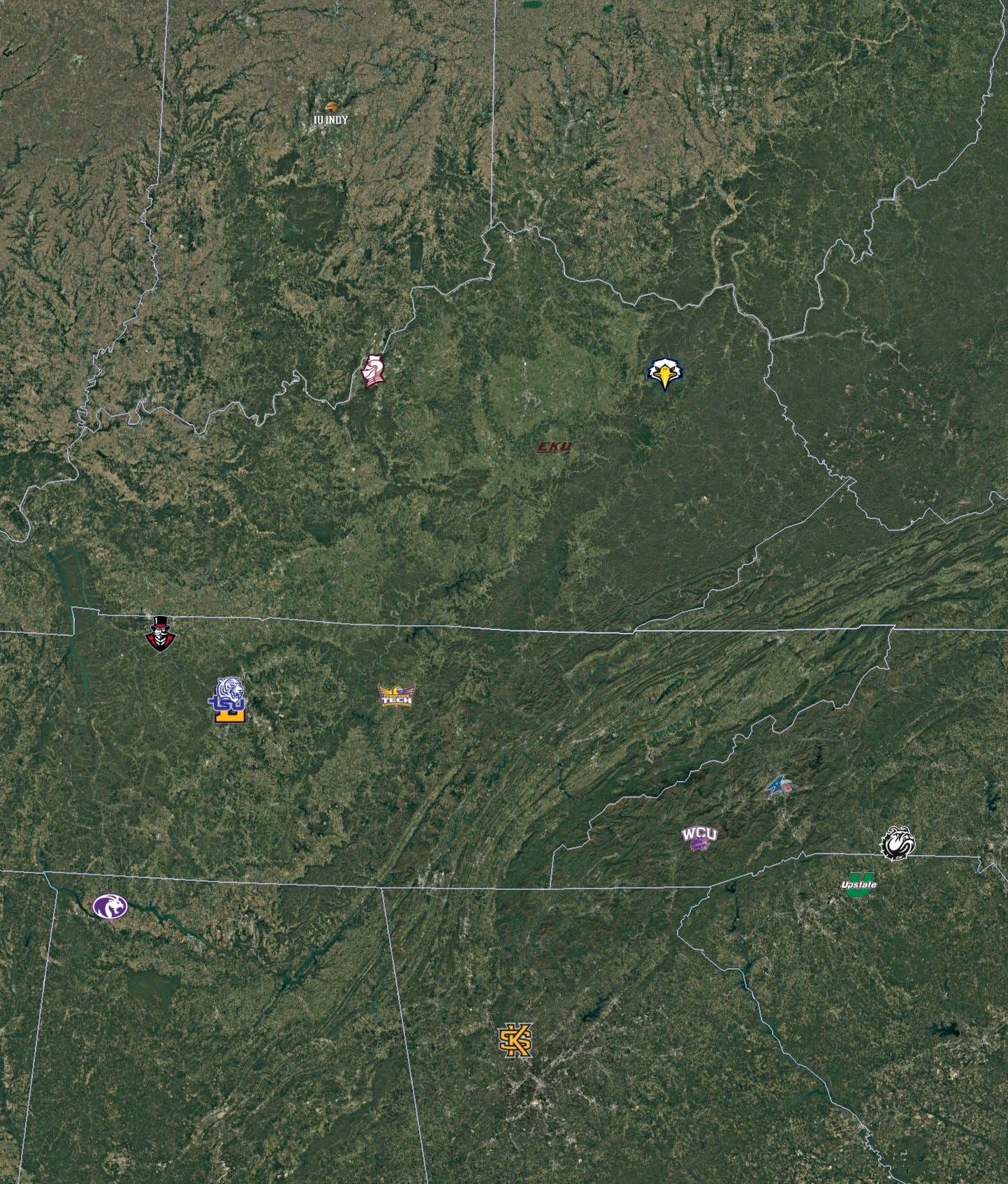
Austin Peay, Bellarmine, Eastern Kentucky, Gardner-Webb, IU Indy, Kennesaw State, Lipscomb, Morehead State, North Alabama, Tennessee State, Tennessee Tech, UNC Asheville, USC Upstate, Western Carolina
At first I was like, “I’m not calling it that, that just sounds silly.” But if you think about it, Atlantic Sun sounds equally silly.
26. The Northeast Megaconference (23 teams) [-6.5]
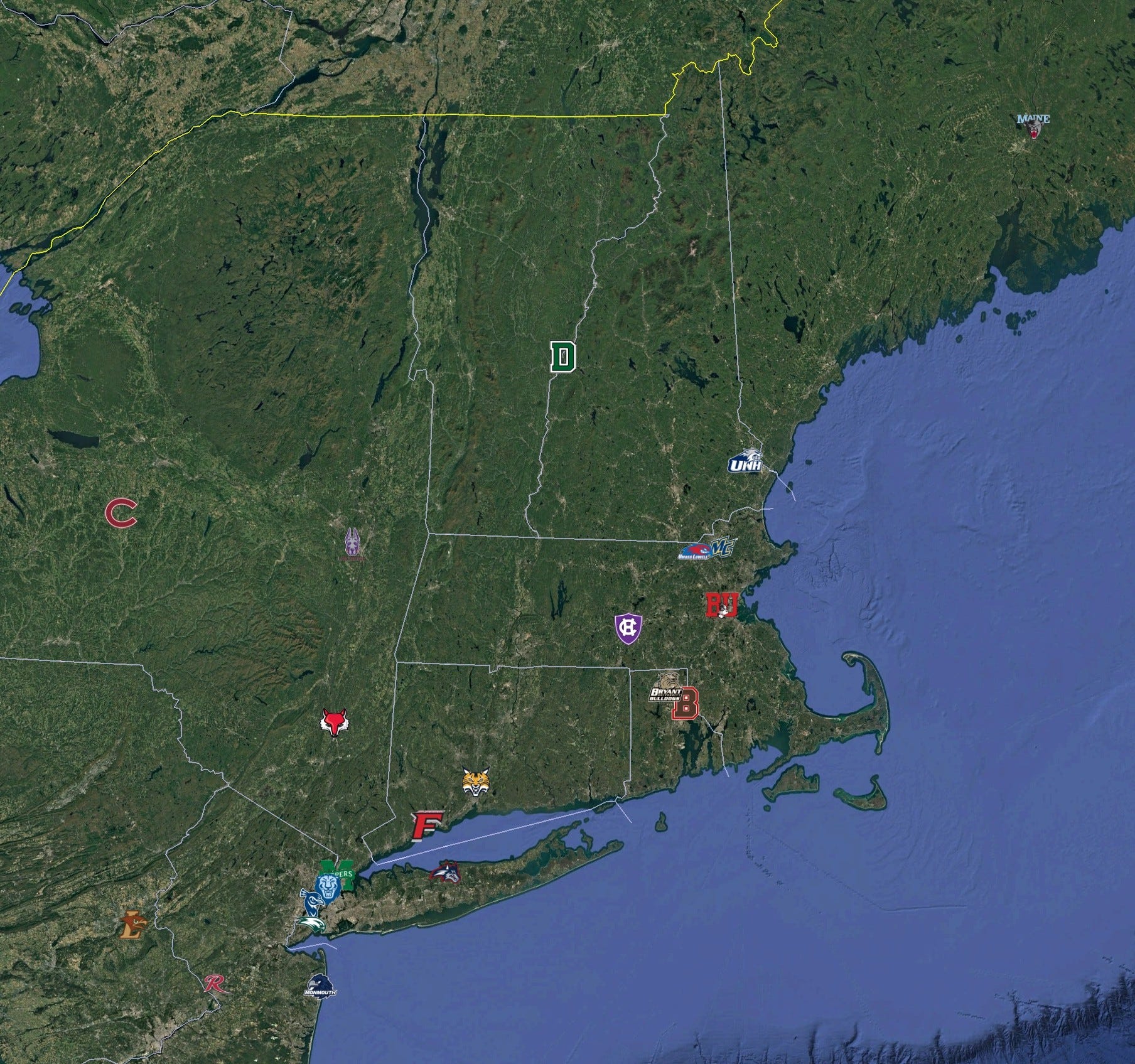
Albany, Boston U, Brown, Bryant, Colgate, Columbia, Dartmouth, Fairfield, Holy Cross, Lehigh, Maine, Manhattan, Marist, Merrimack, Monmouth, New Hampshire, Quinnipiac, Rider, Sacred Heart, Saint Peter’s, Stony Brook, UMass Lowell, Wagner
The 18-team Big Ten and ACC walked so the 23-team NEMC could run. Containing basically every mostly-irrelevant-but-not-quite-complete-bottom-dweller team in a region spanning nine states, this league is a thing of beauty. How would scheduling for a 23-team league work? Hell if I know. Human minds cannot fully comprehend its beauty, much less schedule it. We are all greater for having glimpsed its existence.
27. The Mid-Atlantic Megaconference (18 teams) [-7.1]
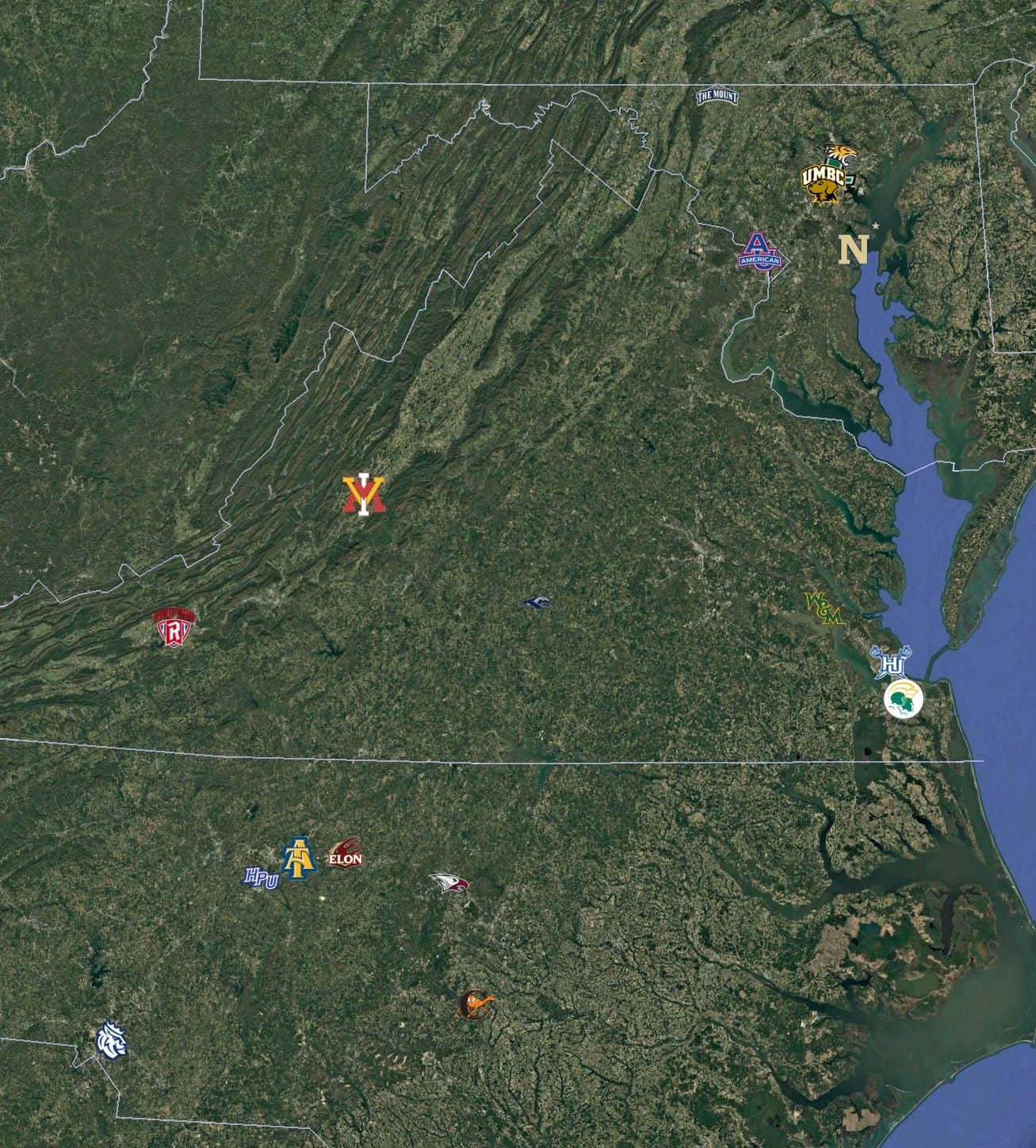
American, Campbell, Elon, Hampton, High Point, Longwood, Loyola MD, Mount St Mary’s, Navy, Norfolk State, North Carolina A&T, North Carolina Central, Queens, Radford, Towson, UMBC, VMI, William & Mary
The little sibling of the NEMC, the MAMC fulfills much the same purpose just a bit further down I-95. It’s satisfying how this league sorts itself neatly into three 6-team divisions by state (counting DC as Maryland).
28. The Louisana League (10 teams) [-7.7]
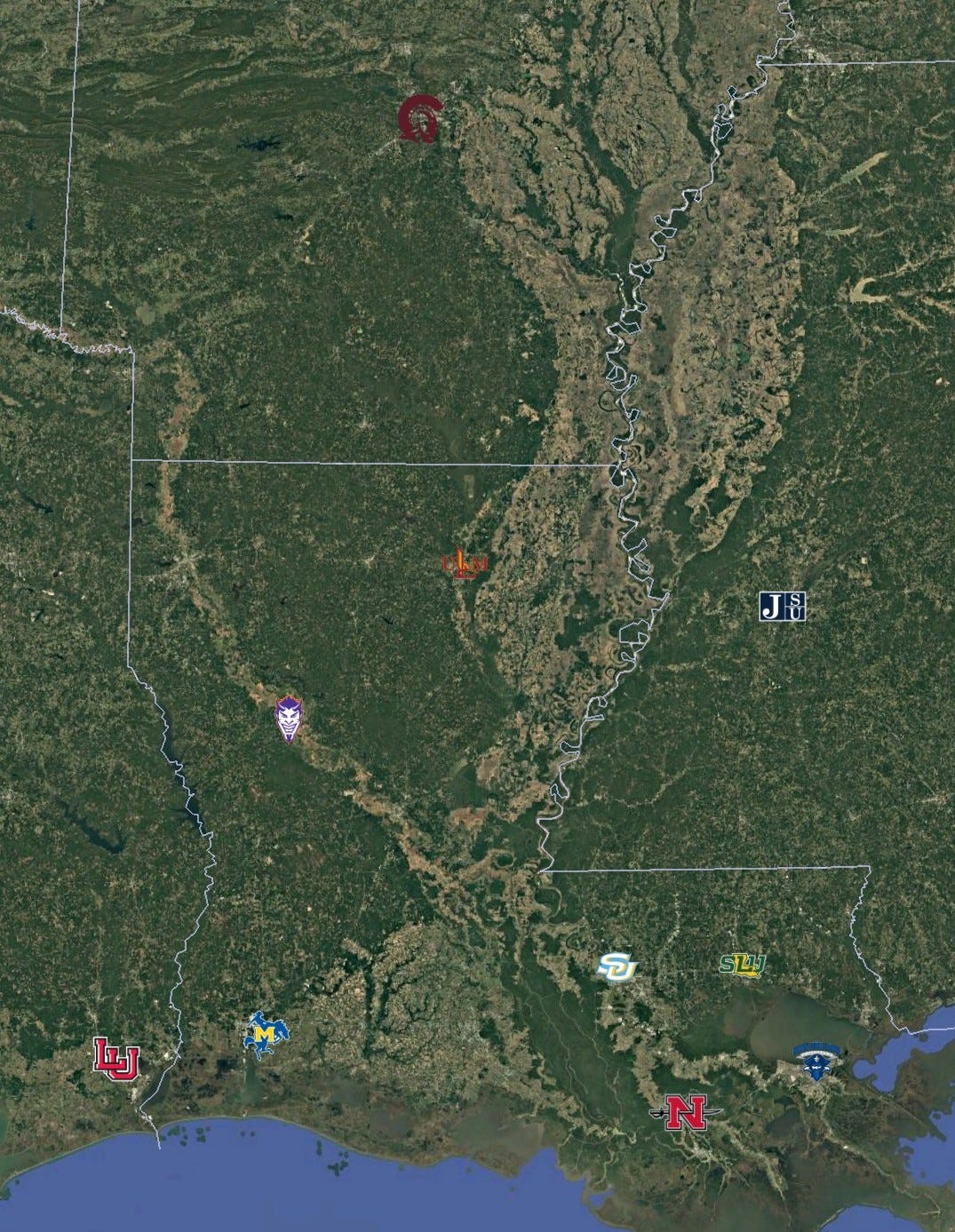
Jackson State, Lamar, Little Rock, Louisiana Monroe, McNeese, New Orleans, Nicholls, Northwestern State, Southeastern Louisiana, Southern
A satisfyingly compact low-major conference.
29. The Southeasternmost Conference (11 teams) [-8.6]
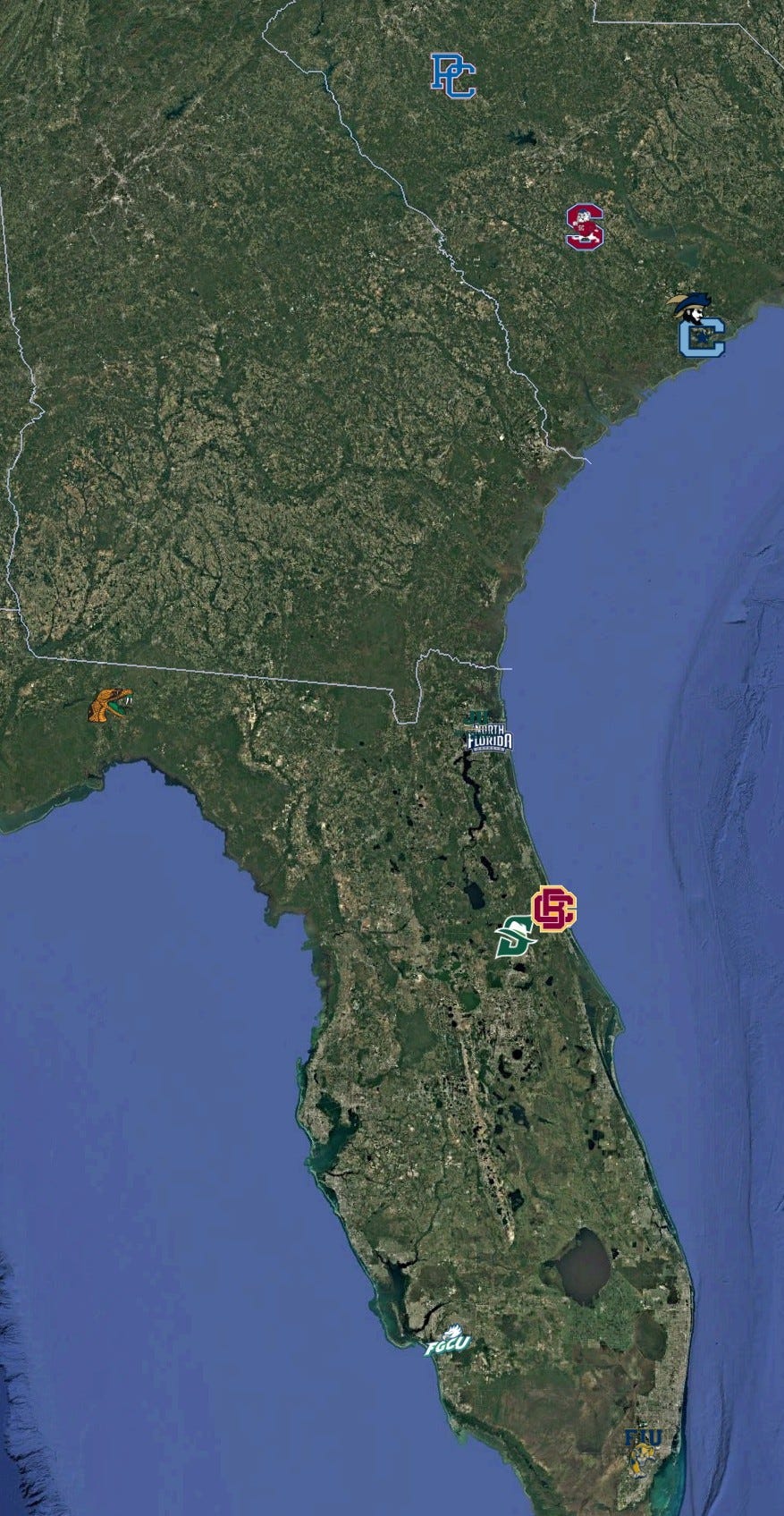
Bethune-Cookman, Charleston Southern, FIU, Florida A&M, Florida Gulf Coast, Jacksonville, North Florida, Presbyterian, South Carolina State, Stetson, The Citadel
Teams in FL and SC but none in GA. That’s not really interesting but it’s something to say, at least.
Tier 7: The Bottom Dwellers
This tier basically separates out the worst teams from the low-major conferences and puts them in their own leagues. This is the realm of the sickos.
30. The Northeast Minor League (16 teams) [-11.0]
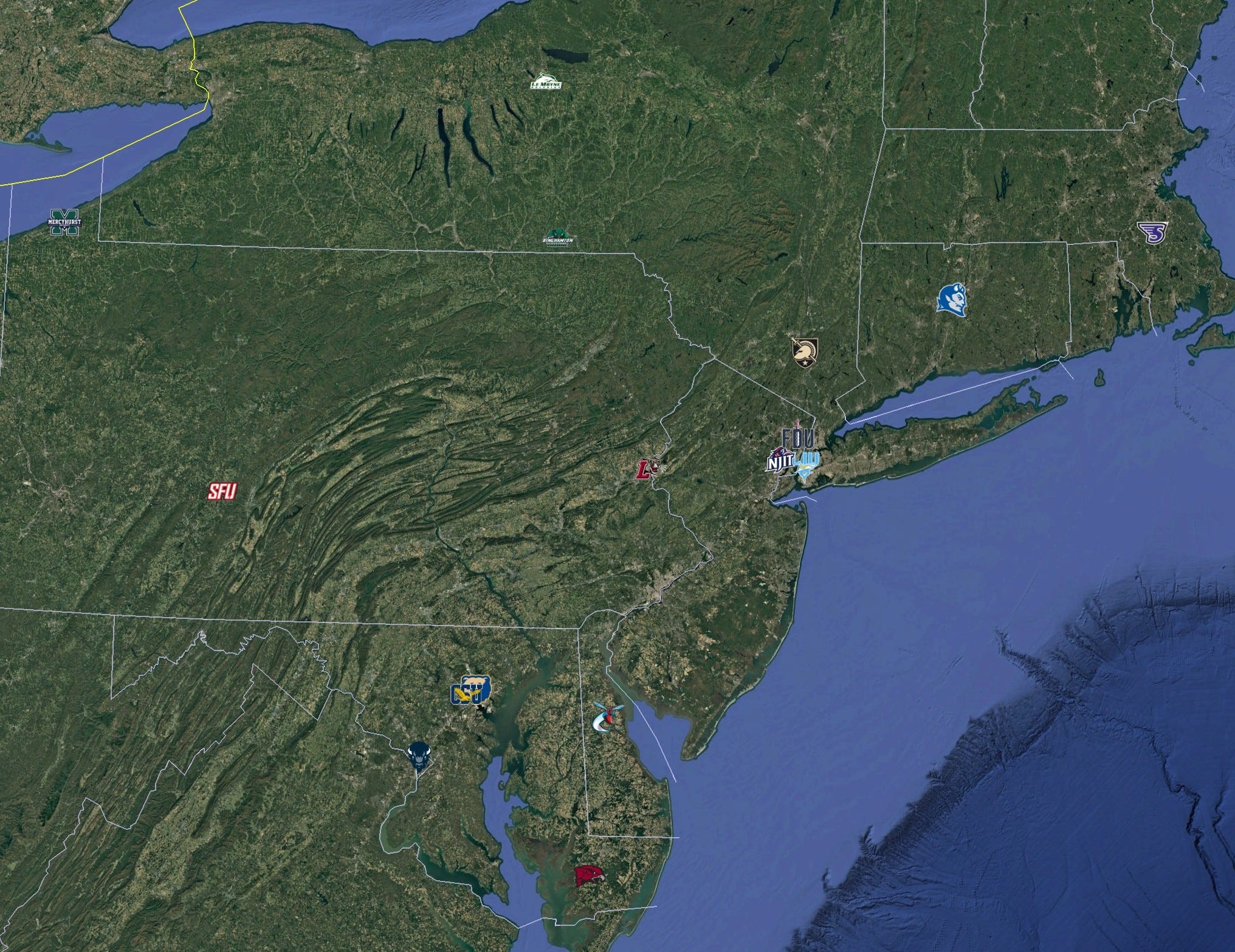
Army, Binghamton, Central Connecticut, Coppin State, Delaware State, Fairleigh Dickinson, Howard, Lafayette, Le Moyne, LIU, Maryland Eastern Shore, Mercyhurst, Morgan State, NJIT, Saint Francis, Stonehill
This conference gathers up the teams that didn’t make the cut for either of the two megaconferences in this region. Not a fun group, aside from maybe FDU.
31. The SWAC 2 (10 teams) [-11.5]
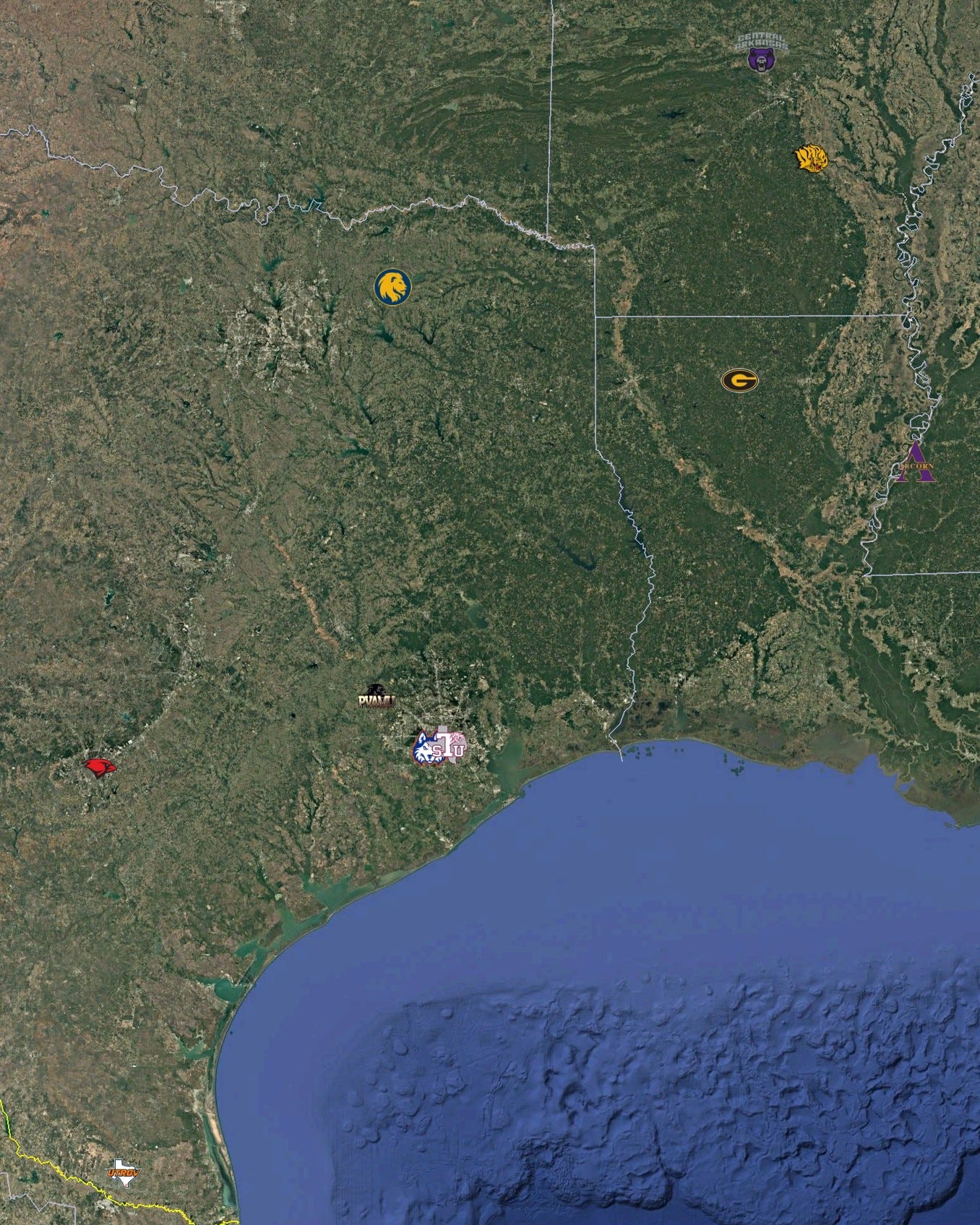
Alcorn State, Arkansas Pine Bluff, Central Arkansas, East Texas A&M, Grambling State, Houston Christian, Incarnate Word, Prairie View A&M, Texas Southern, UT Rio Grande Valley
The bulk of the SWAC swallows up the bottom half of the Southland.
32. The Mississippi River Conference (12 teams) [-11.6]
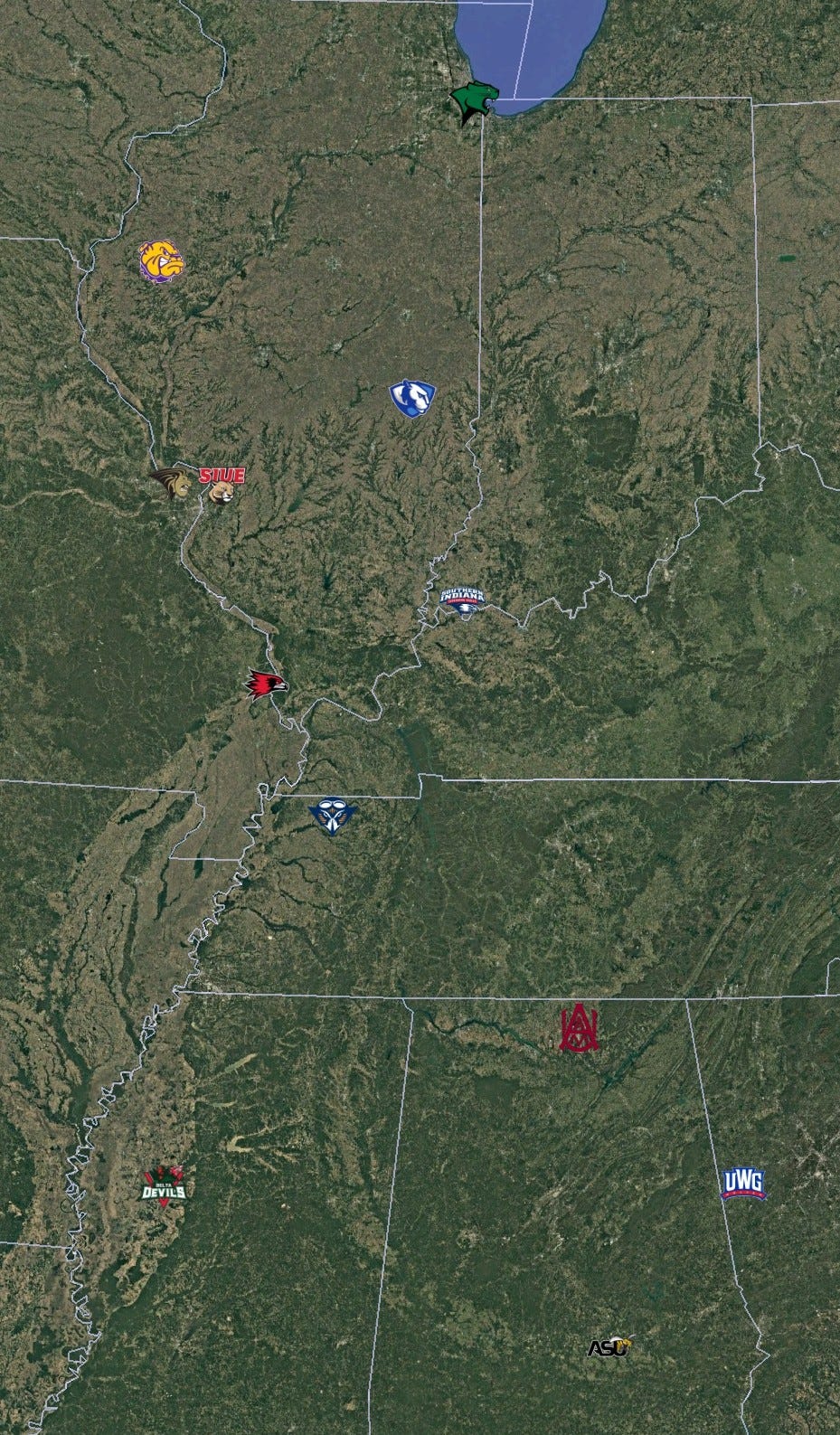
Alabama A&M, Alabama State, Chicago State, Eastern Illinois, Lindenwood, Mississippi Valley State, SIU Edwardsville, Southeast Missouri State, Southern Indiana, Tennessee Martin, West Georgia, Western Illinois
The basement of the SWAC and OVC combine with a few other infamously terrible teams to form the worst conference in the nation.
The Nitty Gritty
If you’ve made it this far, you may be interested in the details. My code can be found here; I mostly just reused the same awful code from the first time around, updating teams.csv with new program ratings data and coordinates for the new d1 teams.
To recap, we use a technique called k-means clustering which essentially works as follows:
Assign 32 random conference centers
Assign each team to its closest conference center
Adjust each conference center to be the center of the teams that it includes from step 2
Repeat steps 2 and 3 a bunch (in my case, 1000 iterations)
I also apply the following adjustments:
Team rating is initially multiplied by 0.7 to adjust its importance relative to geography
Each distance gets multiplied by n^0.75 where n is equal to the number of teams in the conference, to prevent conferences from being too large
This time I did end up doing a few rolls before getting an alignment I liked. This is partially because my code is terrible and buggy and spits out literal nonsense about half the time, and partly because I think I got lucky last time in getting a good result on the first try, and I wanted to have something I felt was similar quality.
If I do this again in a future year, my changes (aside from updated data) will probably be:
Rewrite my code (or just use an existing library, although that may not work given my custom conference size penalty) so it sucks less and works more.
Adjust for the curvature of the Earth. Last time this didn’t bother me at all; this time, it did slightly more, as seeing the maps made the way it biases north-south aligned conferences over east-west ones slightly more apparent—latitude lines are always around 69 miles apart, but longitude lines at, say, 40 degrees N are only around 53 miles apart. It wasn’t enough of an issue for me to want to redo everything, but if I revisit this idea again in the future, I’m probably going to try and correct for it.
Look into adjusting program ratings to try and get rid of the conference strength factor.
And that’s all I have for today! (For those wondering about Project Novum, there’s a long story there but the TL;DR is due to a combination of things I burned out pretty hard; I do intend to finish the project once I have the motivation to work on it, but it likely won’t be in an every-day format.)